
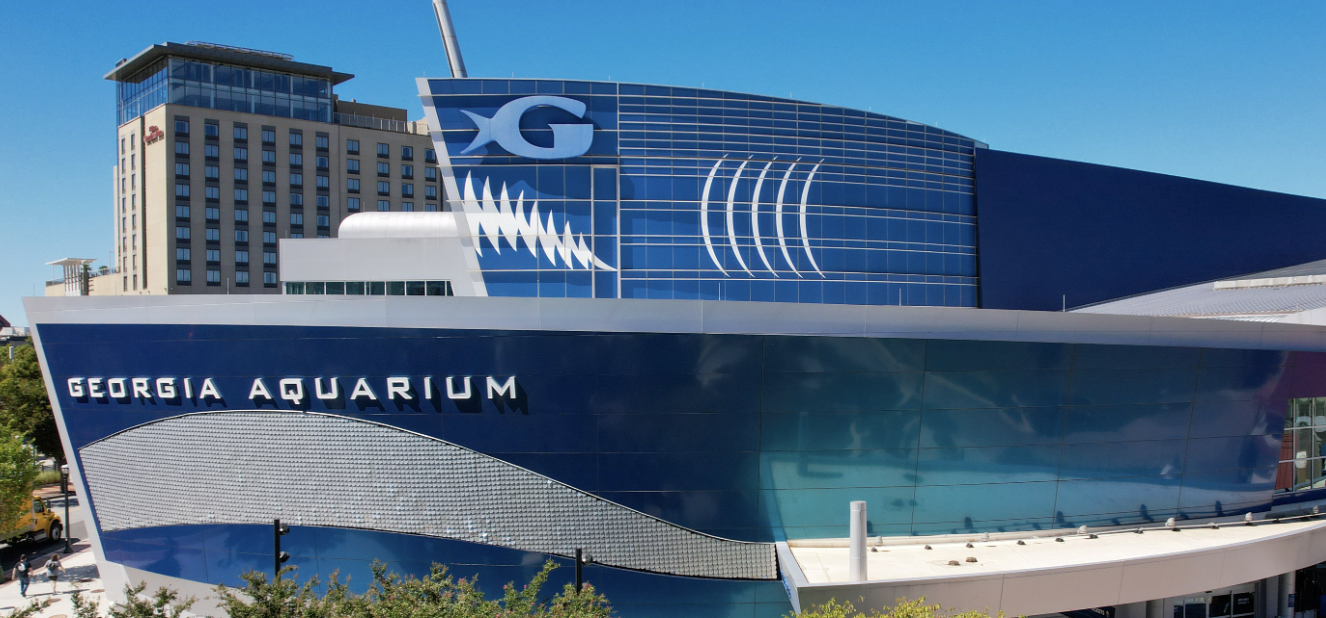
20 Years of Collaboration Between Georgia Tech and Georgia Aquarium
Twenty years ago, Georgia Aquarium opened its doors and has since provided a look beneath the surface into the planet’s vast underwater ecosystems to millions of visitors. In addition to being a world-class tourist attraction, the Aquarium also conducts innovative research and champions conservation efforts for the thousands of species that call the facility home.
As technology plays an increasingly vital role in Georgia Aquarium’s operations, partnerships with Georgia Tech have allowed researchers to gain insight into the biology, physiology, and ecology of animals both in their care and in the wild.
“Working with Tech allows us to be at the forefront of cutting-edge research, and it lets us ask questions that no one else can ask and collaborate to find those answers,” said Cameron Perry, a Tech alumnus and Georgia Aquarium research scientist.
From playing a role in completing the first-ever shark genome map to examining the smallest microbes in ocean environments, Georgia Tech has provided its expertise to the Aquarium for the past 20 years, and new projects are currently underway.
Seeing Is Believing
When Georgia Aquarium opened, most people in the Western Hemisphere had never seen a whale shark in person. For Perry, his first trip to Georgia Aquarium sparked a desire to learn more about the gentle giants. This journey led him to Georgia Tech, where he was one of the first Ph.D. students in Tech's Ocean Science and Engineering program in 2019.
A partnership between Perry’s program and the Aquarium led him from the classroom to the open waters of St. Helena, an island in the South Atlantic Ocean. He and a team of researchers deployed trackers and captured new data related to the mating and migration habits of whale sharks in the wild, leading to increased protection for adults and their young.
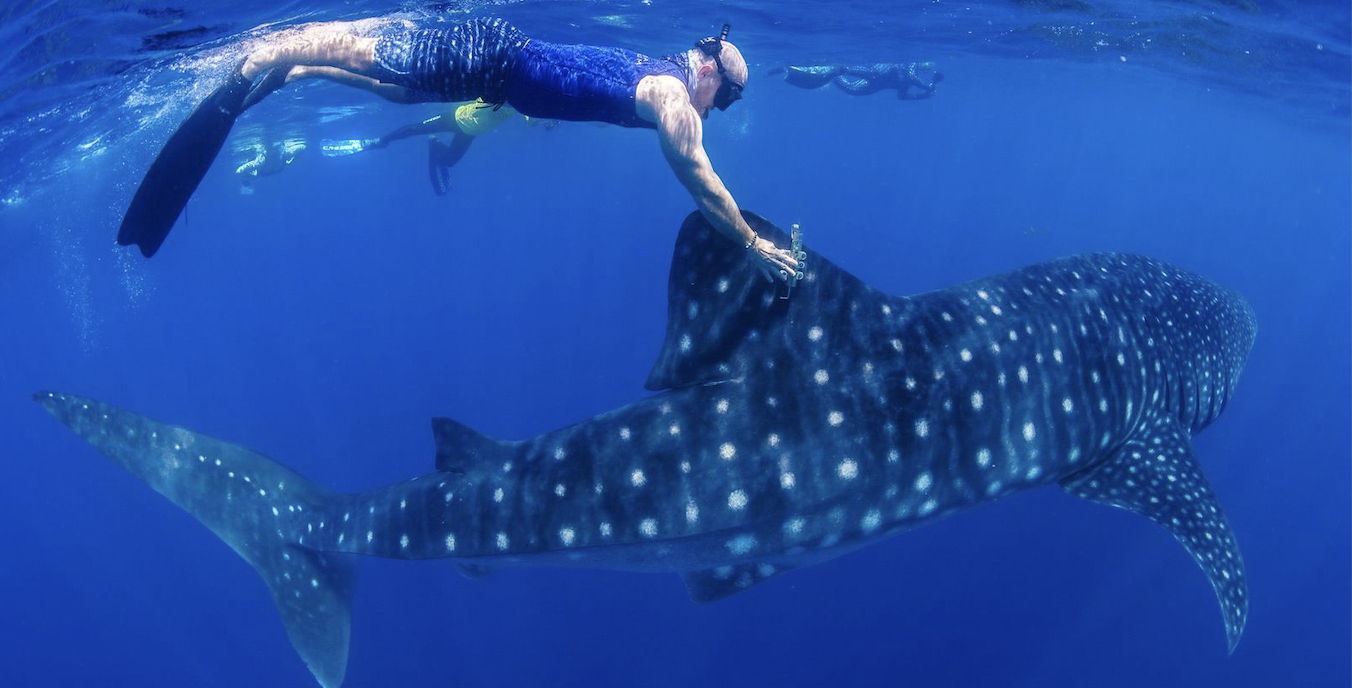
After completing his degree, Perry joined Georgia Aquarium to lead its whale shark and manta ray initiatives. In his role, he feels a responsibility to the next generation of marine scientists — to give them a place where they can be inspired to learn and ask questions, as it was for him.
“Seeing is believing. Coming to a place where you can see these animals and learn more about them is a place where you can learn to love them, learn to care for them, and be a better steward of the environment,” he said.
Innovation Meets Conservation
More than 15 research projects have been completed between Georgia Tech and Georgia Aquarium, each using technology to improve care in aquarium settings and gather data from endangered species in the wild.
“Georgia Aquarium and Georgia Tech support each other's missions because, the bottom line is, we’re all trying to learn more about the ecosystems in which these animals live, more about the species and how we can protect them,” Perry said.
In 2020, before the opening of the Aquarium’s Sharks! Predators of the Deep exhibit, Perry examined the habitat’s transition from fresh to saltwater, collecting data to inform future habitat design, water-quality management, and population density at aquariums worldwide.
Several recent projects showcase how the Institute continues to make a difference and advance conservation efforts through technological innovation.
Machine Learning in the Tanks
Georgia Tech has taken a leading role in exploring applications of artificial intelligence and machine learning, an expertise that Emily Keaton, a second-year Ph.D. student in biology, is using to monitor animals at the Aquarium. After working as a dive master in the Aquarium’s dive immersion program for three years, Keaton returned to research at Tech as a member of Patrick McGrath’s lab.
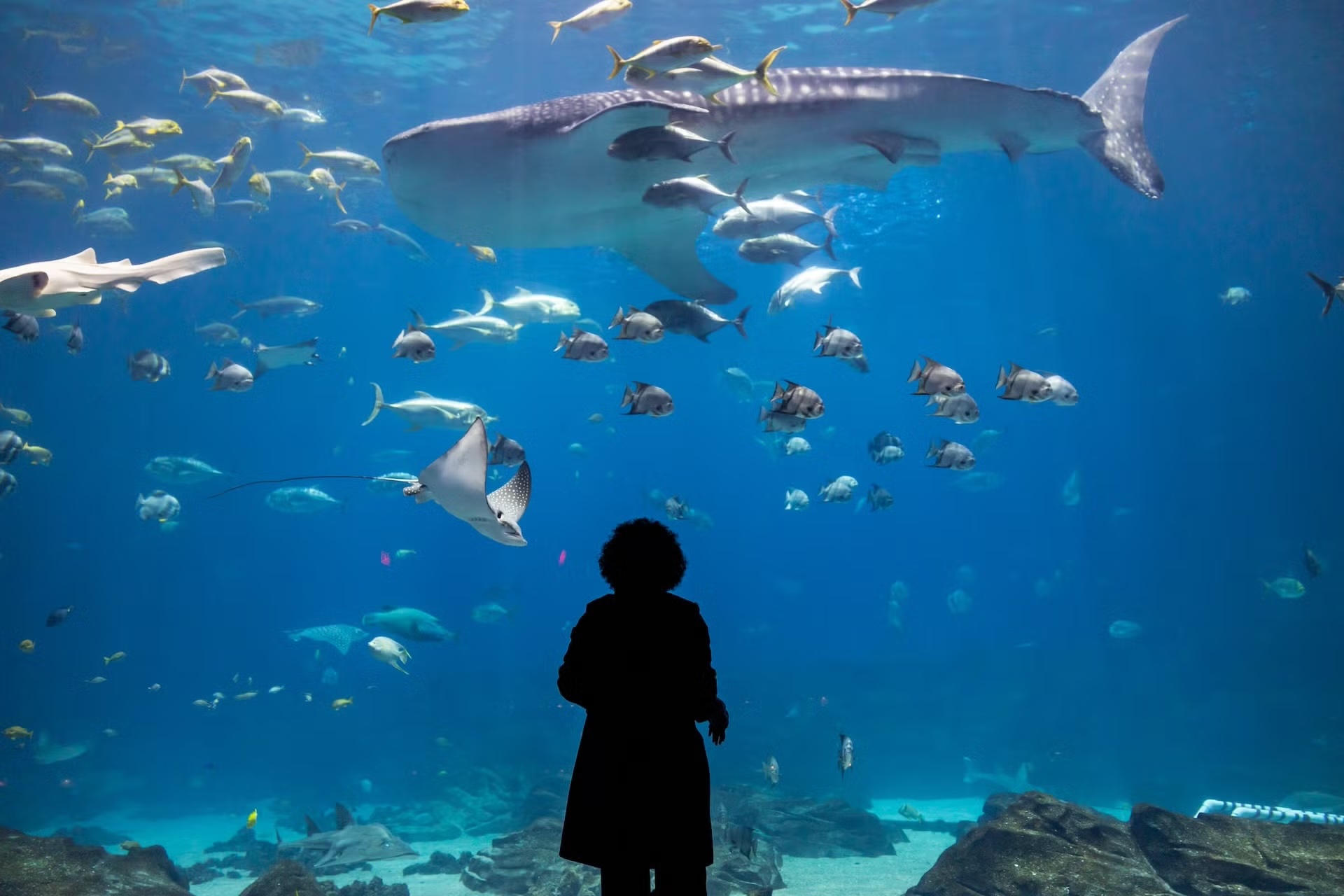
By installing cameras in the Aquarium's largest exhibit, Ocean Voyager, Keaton's team aims to improve data collection and behavioral monitoring using machine learning. The exhibit is home to more than 50 species, and Keaton’s team believes the creation of datasets and baseline behavioral profiles can help to answer questions about quantifying changes, when they happen, how the environment plays a role in behavior, and more.
A New Type of Enrichment
Enrichment devices allow animals, like sea otters, to engage in activities that mimic natural foraging behaviors and stimulate their brains. Looking to capture new information on how otters learn to use new devices and how their interactions with enrichment devices may change over time, the Aquarium partnered with the Animal-Computer Interaction Lab to design new devices implanted with motion sensors.
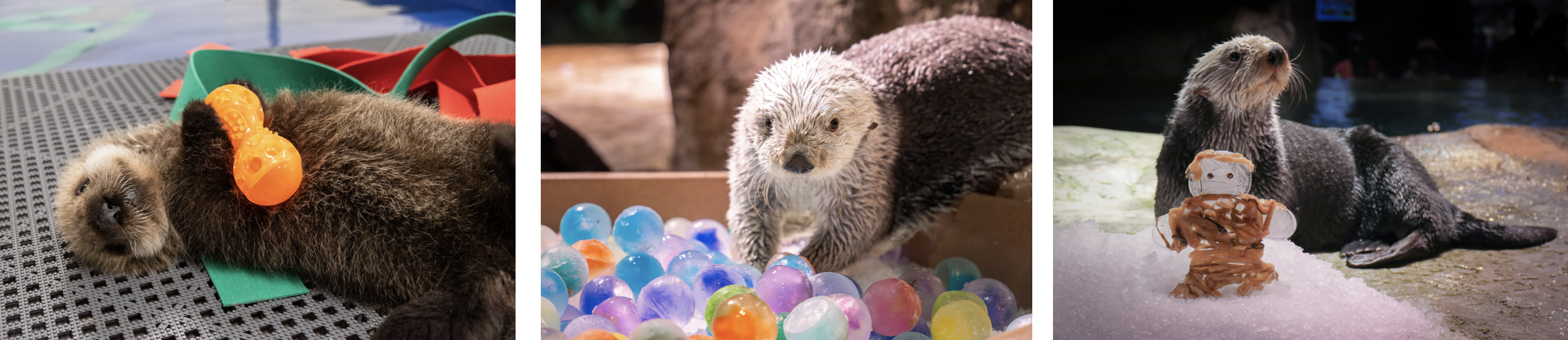
Charles Ramey, a sixth-year Ph.D. student in the School of Interactive Computing, serves as the principal investigator for the Aquarium on the project. The study involved five otters and enabled the Aquarium to measure interaction patterns with precision, turning playful activities into a potential early-warning system for behavioral changes that might reflect shifts in health.
Advanced Tagging
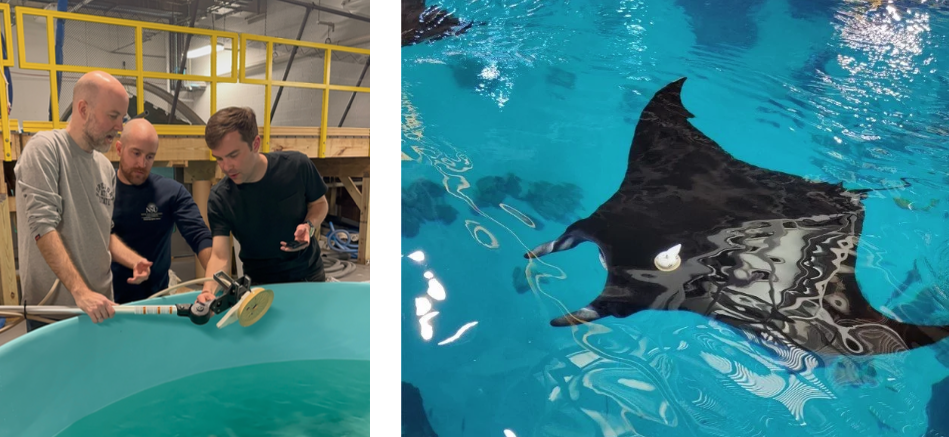
Ramey had worked alongside Aquarium researchers a decade ago as an undergraduate to develop advanced whale tags using 3D printers at the Georgia Tech Invention Studio. So, when Perry and his team were looking to create a similar tool for manta rays, Ramey was ready. The innovative suction cup-style tags, which will allow researchers to track manta rays deeper into the ocean, across longer stretches, and collect data about their environment, have been developed using parts created in the Georgia Tech Prototype Lab.
While he isn’t a marine biologist, Ramey sees his involvement with the Aquarium as a chance to deploy technology in the field and to expand access to conservationists in the areas of the world where manta ray populations are declining. The data collected through this project will give researchers insight into the ecology of manta rays, their behaviors, and the cause of endangerment in the wild while helping to develop and implement mitigation strategies.
The Sounds of a Healthy Coral Reef
As the oceans’ coral reefs continue to feel the effects of a changing climate, researchers from both Tech and the Aquarium are working to uncover the root causes of reef loss and to design restoration efforts. A chapter of Ph.D. student Skylar Lama’s thesis, which examines how organisms in a coral reef interact with their fluid environment, focuses on acoustics.
Before deploying her hydrophone in the waters of French Polynesia, the fourth-year ocean science and engineering student gained experience capturing data in the Aquarium’s Tropical Diver exhibit. There, she learned to account for fish around the coral, the sound of waves crashing overhead, and other environmental factors she would encounter in the field before analyzing the acoustic data.
Beluga Microbiome Analysis
One new research venture is a collaboration between research scientist Patrick Charapata and Lauren Speare, assistant professor in the College of Sciences and director of the Speare Marine Microbial Ecology Lab. During the yearlong study, the team will collect and analyze fecal samples from the Aquarium’s beluga whales to document changes in the animals’ microbiomes, hormones, and overall physiology.
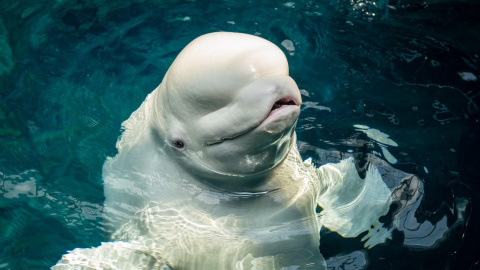
They hope to give the research community a more detailed view of how diet, environment, age, and other factors affect the species in both an aquarium setting and in the wild. Speare and Charapata explained that the minimally invasive process will provide a wealth of new insight into the species’ microbiome, for which current research is scarce.
Charapata is based in Seattle and often conducts research in Alaska, where beluga populations have decreased in recent years. This data will reduce the number of samples needed in the wild and provide a better baseline to determine the environmental factors contributing to population loss.
Similar studies conducted with Tech analyzed samples from the Aquarium’s African penguins, and a 2018 project was the first to identify homarine as a key biomarker distinguishing healthy from unhealthy whale sharks.
Hands-On Experience
Collaboration between Georgia Tech and Georgia Aquarium also provides on-the-job experience for students interested in pursuing careers in the field.
“If you can build suction cups that can withstand the elements of the ocean, there’s not much that Georgia Tech can’t prepare you for,” Ramey said. “These are real engineering problems that need solving — whether it’s applied in the ocean, for climate change solutions, or other areas of science and engineering. Getting students involved in research is so important because, someday soon, they’ll be the ones facing these problems.”
As the Aquarium celebrates its 20th anniversary, Perry and the staff can reflect on the breakthroughs and research conducted over the past two decades while also looking toward new horizons.
“What we do is driven by a desire to protect these species that have existed for millions of years and an understanding that we are but a small piece of the puzzle,” Perry said. “Insight into the biology and ecology of these animals not only helps us, but it will inform future scientists and conservation professionals. Science is all about building bricks, so we’re doing our part to build upon the foundation of those who came before us for those who will come after us, and the collaboration between Georgia Tech and Georgia Aquarium is a great way to lay down more bricks within the foundation of science and research.”
Credits
Story: Steven Gagliano
Video: Maxwell Guberman