
The Science of Saving Memories
The Science of Saving Memories
Almost everyone knows someone touched by Alzheimer's — a parent who no longer recognizes familiar faces, a grandparent whose stories have gone silent. It's a disease that doesn't just affect the person who has it; it takes something from everyone around them. At Georgia Tech, researchers in the Wallace H. Coulter Department of Biomedical Engineering are working to change that — not with surgery or medication, but through light and sound.
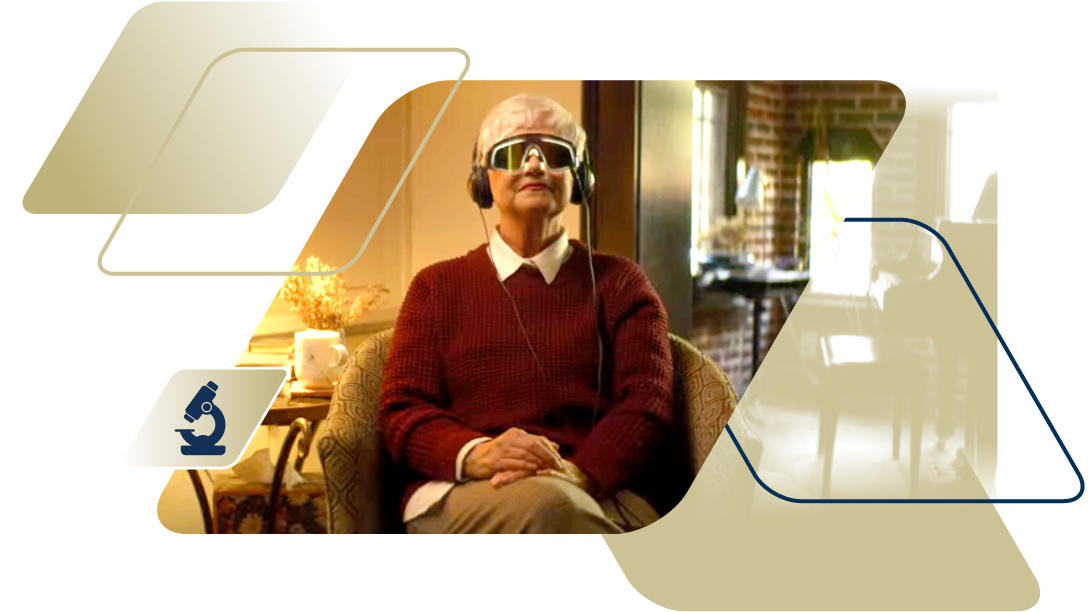

At Georgia Tech, we turn deep science into therapies that could give people back what matters most.
Memory isn't just stored in the brain. It's woven into who we are. Georgia Tech researchers explain how Alzheimer's disease disrupts the brain's natural electrical rhythms, and what happens when those rhythms go quiet. Their work with gamma wave stimulation — using precisely timed flickering light and sound — has moved from animal models into human clinical trials, with promising early results. The approach is noninvasive and could one day be used at home. If it works, it won't just treat a disease. It will give families more time together.
Ready to Learn More?
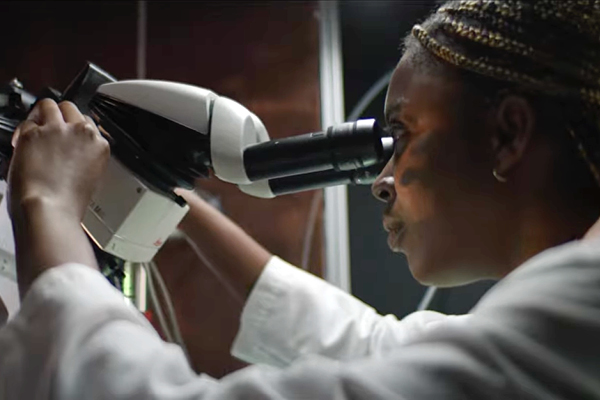
Hear the Breakthroughs Behind the Research
Listen to the Holy Shift! Biomedical Breakthroughs Shaping Tomorrow podcast to explore how Georgia Tech researchers are advancing neuroscience and biomedical innovation.
Moving the Needle on Parkinson's Research
From early seed grants sparking new ideas to larger investments scaling the most promising work, the Blue Sky Research Program supports Parkinson's science at every stage.
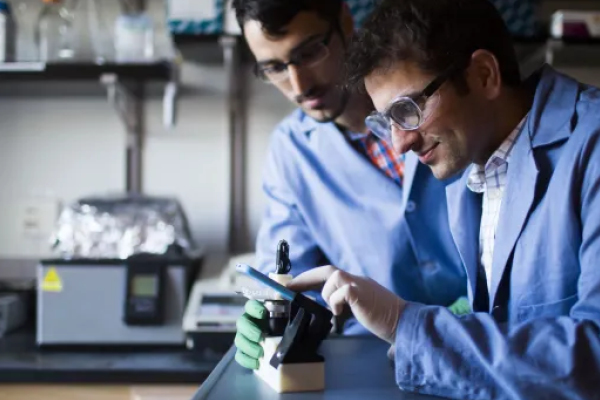
Discover the Walter H. Coulter Department of Biomedical Engineering
Learn more about one of the nation’s leading biomedical engineering programs and the students and faculty redefining what’s possible in human health.