
Powering the Future
Georgia Tech Alumni Fuel Nation’s Largest Nuclear Plant
Primarily driven by the rapid construction of data centers nationwide amid the artificial intelligence boom, total electricity usage in the United States is projected to grow by 32% by 2030, according to the Connected Grid Initiative.
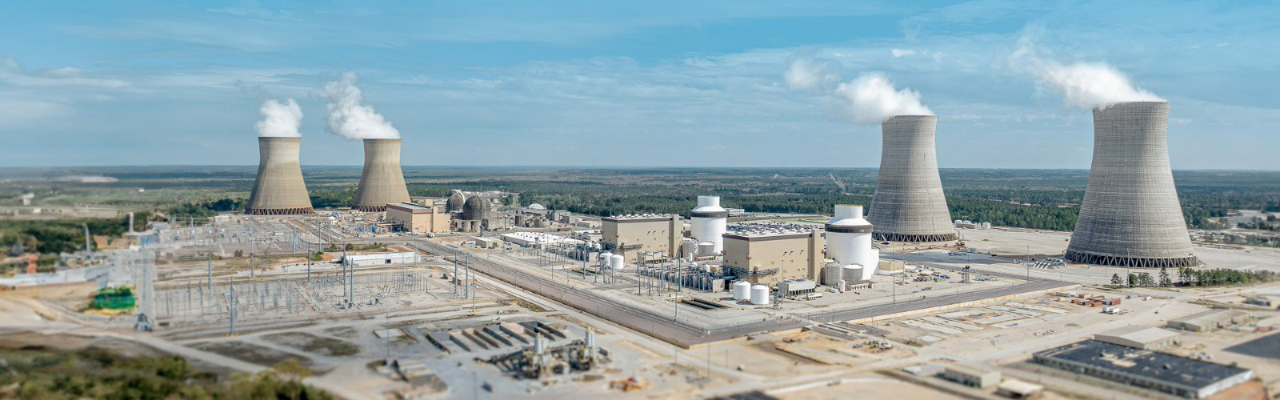
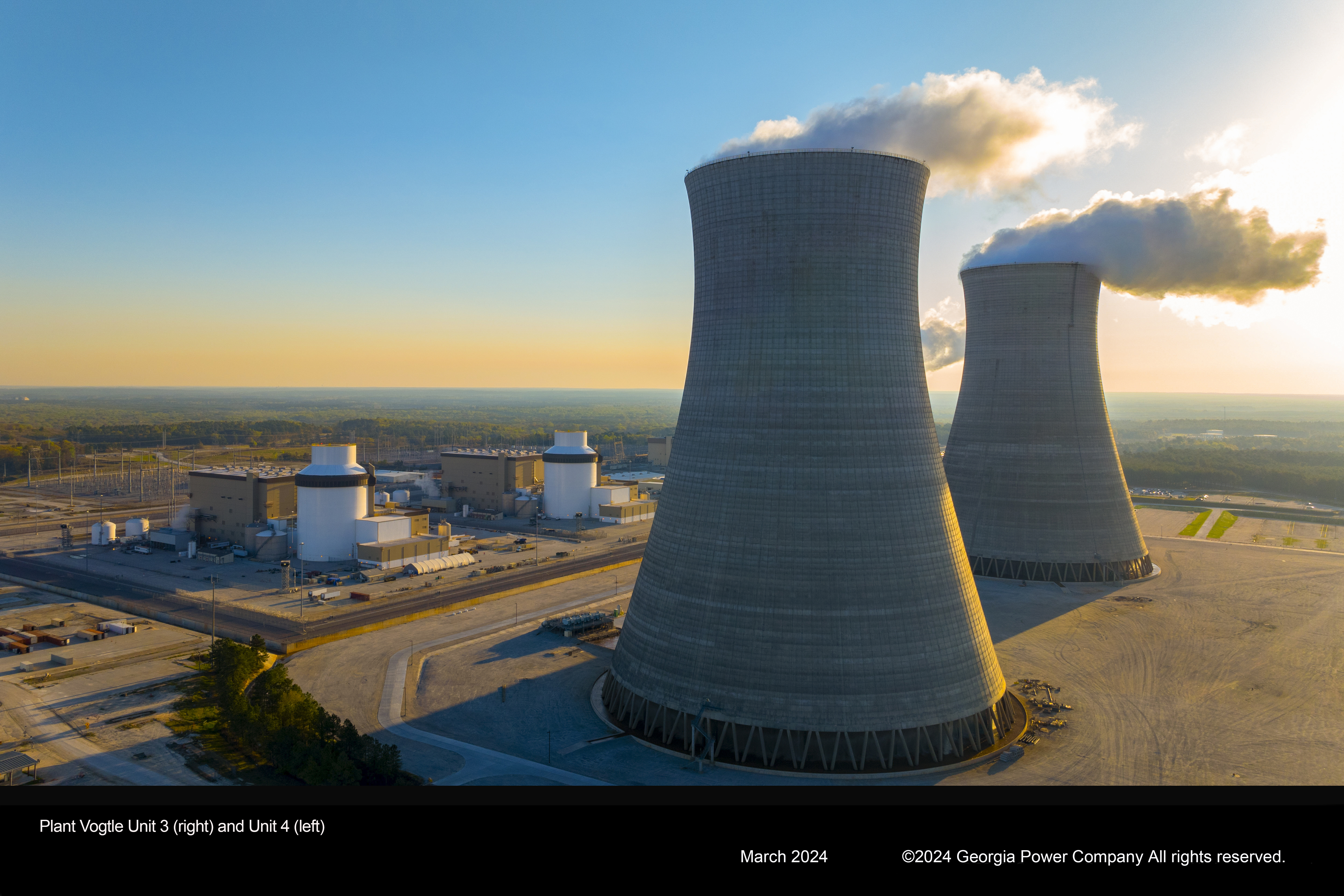
Nuclear power currently supplies roughly 20% of U.S. electricity, but because of its reliability compared to wind and solar power and its potential to reduce carbon emissions, the industry is positioned to expand its role in reshaping the future of energy. When Southern Company officially connected Units 3 and 4 at the Alvin W. Vogtle Electric Generating Plant to the grid, Georgia became home to the country’s largest nuclear power facility and to the first nuclear units built in the U.S. in more than 30 years.
With Georgia Tech alumni playing critical roles at the plant, students entering the field, and faculty conducting innovative research, the Institute’s influence can be felt throughout the industry.
On Site

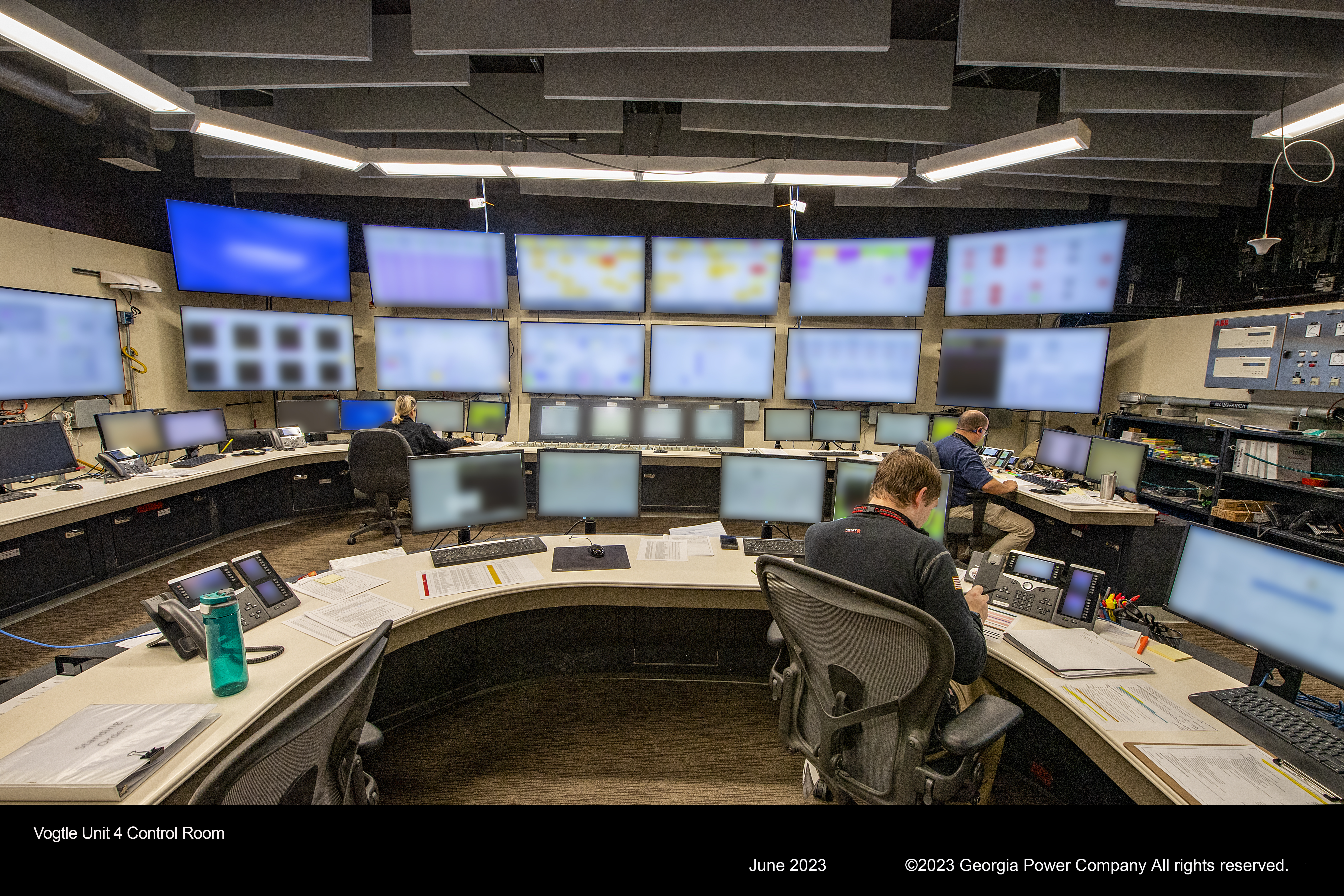
Located 180 miles from Atlanta in Waynesboro, Georgia, Plant Vogtle houses four reactors on a 3,000-acre site, supplying power to over 1 million homes and businesses each day at a generating capacity of 4,800 megawatts. Operating 24/7, the plant’s thousands of systems are interconnected and monitored around the clock. Sarah Gillham, NRE 2010, manager of online controls, oversees the planning and execution of the reactor’s maintenance to minimize service interruptions.
“I like to think of the plant like a house. You have your physical structure, with mechanical, electrical, and plumbing systems within it, all of which need to be properly maintained to keep it running effectively. At home, it may be scheduling an electrician or changing your air filters, but here, it’s hundreds and thousands of activities and man-hours that we have to ensure are done on time, on the right equipment, and in a way that doesn't conflict with all the other operations of the plant,” she said.
Since graduating from Tech, Gillham has held various roles in the nuclear industry and credits her time at the Institute for developing the ability to think critically to solve complex problems and to develop reliable systems that ensure the plant’s viability over time.
John Williams, NRE 2002, serves as Southern Nuclear’s senior vice president of technical services and external affairs — responsible for the company’s multibillion-dollar portfolio of upgrades to its units, outage services, emergency planning, and Nuclear Regulatory Commission engagement. In his role, Williams sees the ever-expanding nature of nuclear energy, its potential to power the future, and how Southern Nuclear is laying out the blueprint.
“Because of Vogtle Units 3 and 4, the stage has been set to believe that we can build nuclear in the United States,” he said. “Now we’re focused on getting more production out of our units than ever before.”
Williams says adding more nuclear energy to the grid diversifies our fuel mix and enhances reliability for growing customer demand.
“When our plants are running, our customers are paying less for electricity. Nuclear power provides energy to our schools and our hospitals all the time, not just when the sun is shining or when the wind is blowing,” he said.
According to Southern Company, for a wind farm to match Plant Vogtle production, it would need to cover an area of over 1,000 square miles. Additionally, a single 1/2-inch uranium nuclear fuel pellet — of which it takes approximately 74 million to power the four reactors at Vogtle — creates as much energy as 150 gallons of oil.
“It’s not just nuclear engineers. We need mechanical, civil, and electrical engineers. We need chemists, physicists, employees with finance, international affairs, and public affairs experience ... It’s a brilliant time to think about energy as a career.”
The Next Generation

Engineering may be at the forefront of nuclear energy, but Williams says that for the industry to reach its full potential, it will take a collaborative effort.
“It’s not just nuclear engineers. We need mechanical, civil, and electrical engineers. We need chemists, physicists, employees with finance, international affairs, and public affairs experience,” he said. “All of those career aspects touch this energy infrastructure that we are growing, and it’s a brilliant time to think about energy as a career.”
Tech alumni have shaped the vision for Units 3 and 4 since the beginning. Director of Corporate Development and Analysis Steve Fluevog, ME 1984, conducted the financial analysis for the project. Assistant Treasurer for Southern Company Services Jon Haygood, ISyE 1998, played an integral role in constructing the project’s financial framework and securing federal loan guarantees.
Steve Biegalski is the Nuclear and Radiological Engineering and Medical Physics Program Chair in the George W. Woodruff School of Mechanical Engineering, and says that the curriculum is changing to meet the needs of the industry, introducing policy, finance, supply chain, AI, and other elements into coursework to help students “build their toolbox” at Tech.
“Our industry partners tell me they don’t want cookie-cutter students. They want graduates who contribute in unique ways, so we create an environment where everyone can build skills that fit their passions and help them leverage those skills in their careers,” Biegalski said.
Southern Company hired its first Georgia Tech co-op student in 1920 and remains one of the Institute’s largest employers. Holly Alesandro is one of three Tech students working with Southern Nuclear and one of the two at Plant Vogtle this semester, as a member of the Risk Informed Engineering team. Alesandro grew up in Miami, Florida, across Biscayne Bay from the Turkey Point Nuclear Generating Station. Intrigued by the scale of the operation, Alesandro began to study plant design and is now a mechanical engineering student minoring in nuclear and radiological engineering.
Through her coursework, Alesandro has continued to find new applications of nuclear energy, from reactor design to the fission process. Looking for a way to invite others to explore the field, Alesandro co-founded a Women in Nuclear chapter at Tech, which has quickly grown to 30 members.
“It's just exciting to know that I am a piece in a puzzle and can have an effect on a bigger picture. I want to share with my classmates and younger students that there is going to be a gap between the current workforce and the demand needed in the future, so I think more people should definitely be more excited about this,” Alesandro said.
The Cutting Edge
From safeguarding nuclear waste to preparing for the surge in energy demand, follow the links below to learn more about how Tech researchers are taking a leading role in the industry’s future.
Credits
Story: Steven Gagliano
Layout: Kristen Bailey