
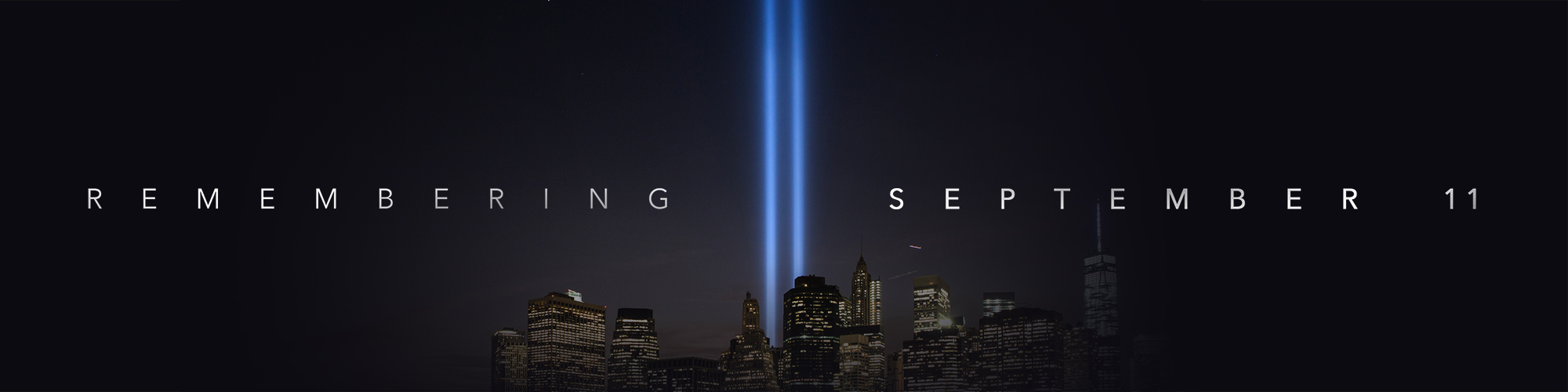
Many recall the places they stood and the emotions they experienced when hijacked planes struck New York City’s World Trade Center, the Pentagon, and a field in Shanksville, Pennsylvania — and yet the memories of Sept. 11, 2001, represent an ever-changing legacy.
Twenty-five years later, 9/11 is increasingly a historical event for Georgia Tech students rather than a lived memory.

Michael Arad was only a few months out of grad school and had just moved to Manhattan as a young architect when tragedy rocked his world and brought the entire nation to a standstill.
On Sept. 11, 2001, he went to the rooftop of his building after hearing reports that a plane had hit the North Tower at the World Trade Center. From that vantage point, he saw a second plane hit the South Tower. “Something certainly made me feel that I had to find a way to respond,” said Arad. “For me, my tools as an architect led me to think about what you could do here,” he said.
Two days after the attack, Arad found himself standing with strangers in Washington Square Park experiencing very raw emotions. Many felt profound fear and loss. But there was also a shared sense of unity that helped shoulder the grief. “We weren’t facing the horrors we’d witnessed alone but as part of a community,” Arad said. “They hoped to sow fear, they hoped to sow division, and how we responded was the opposite of that. This country was never more united than it was after that attack.”
Healing Through Congregation
The experience of witnessing the attack and seeing communities heal together inspired Arad to develop his design for a memorial in the space where the twin towers once stood.
When an open competition was held to find a design for a 9/11 memorial, Arad already had his ideas ready to go. His vision directly contradicted the competition guidelines, which called for designs to sit in the former footprint of the World Trade Center some 60 feet below ground. Arad credits lessons he learned at Georgia Tech for helping him hold true to his vision for creating a space that allowed people to come together and respond as a community.
In 2004, his design was chosen from more than 5,000 entries from around the world.
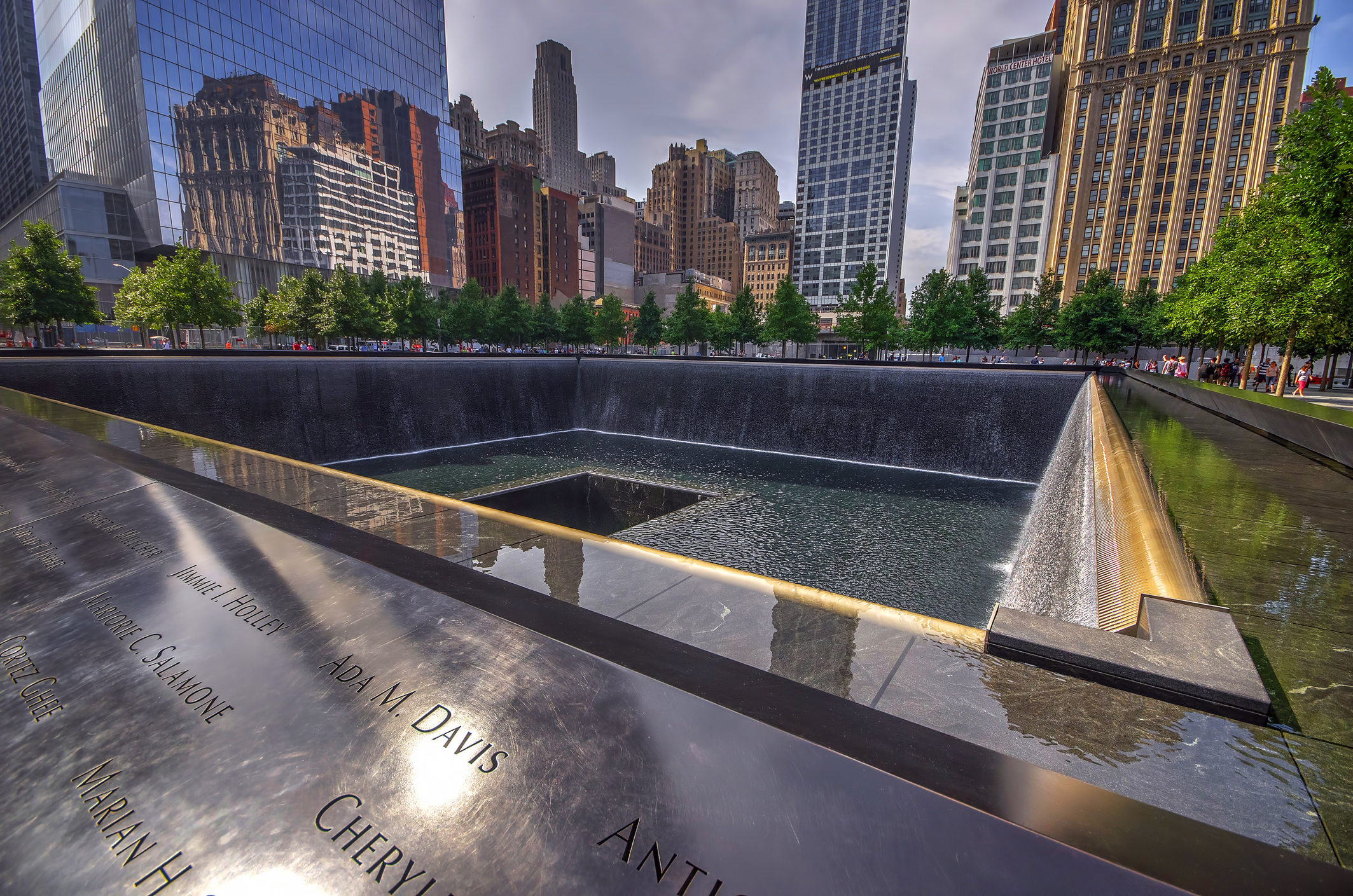
Now, 25 years after the attacks, Arad’s street-level design has created a memorial space that is easily accessible for the millions who come to take in the experience while also serving as a reemerged pass-through for thousands who live and work in the area. “There was an important balance to find,” Arad said. “How to commemorate loss and absence. We were not trying to build two new towers but to find a way to make the loss visible and persistent. You’re in the city, but you’re somewhat removed from it.”
The two square reflecting pools represent the former footprints of the towers and mark the permanence of the void left by the towers that fell and the lives that were lost. Inside the pools are thundering waterfalls, which help drown out the sounds of the surrounding city, allowing visitors to reflect on the memories that the site holds.
“We have such clear, seared memories. How do you find a way to share that experience in a way that brings out the best in people?” Arad asked.
The Evolving Legacy
Ten years after the memorial opened to the public, an addition was made to the memorial’s design to acknowledge the evolving legacy of September 11.
“We had not thought about the impact of 9/11 illnesses,” he said, referring to the thousands of first responders, workers, and residents who were exposed to the airborne hazards around the World Trade Center site. Two decades after the attacks, chronic illnesses spiked, and thousands of deaths have been attributed to the toxic conditions at Ground Zero.
Arad and colleague Peter Walker designed a memorial glade honoring those affected by 9/11-related illnesses. “Being able to speak to a constituency that was not addressed, to correct that shortcoming, was an incredible opportunity,” Arad said.
The glade features six stone monoliths that have been inlaid with steel recovered from the destruction. The stones defiantly rise skyward, their coarse edges representing the resilience of recovery workers: jagged and bruised but strong and enduring.
When you visit, you may find white roses inserted into the names on the bronze panels. Honoring the person’s birthdate, the tradition originated with volunteers who work at the memorial — many of whom also experienced the attacks firsthand.
The memorial is both active and contemplative, inviting visitors to bring their own memories and emotions to the space. “This is not something you visit once,” says Arad. “It has to be part of the lived experience, not just to say 'We’ll never forget' and never come back here.”

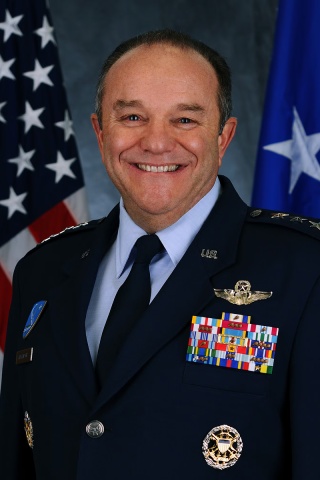
Georgia Tech is honored to have a retired four-star Air Force general on faculty.
On Sept. 11, 2001, Gen. Philip Breedlove was serving as chief aide to Secretary of the Air Force Jim Roche inside the Pentagon.
“It’s important to me as a Yellow Jacket to share what I and other Yellow Jackets felt on that day,” he said. “And it’s important to me as a former senior military officer that generations that weren’t really cognizant of the times understand what happened on that day.”
Breedlove was in his office when staff alerted him that a plane had struck the World Trade Center.
“We turn on the TV, and I’m watching a replay of the first airplane hitting the building,” Breedlove said. He returned to his office just in time to see the second plane strike the South Tower. “My staff and I agreed this was not an accident.”
He then returned to the breakfast meeting to advise that they adjourn because America appeared to be under attack.
Pressing the Button
Breedlove and Roche started figuring out their crisis plan while they watched the live television coverage of what was unfolding.
“Then the whole Pentagon shook,” Breedlove said.
Only seconds later, he recalled, an acrid smoke started entering the room. That prompted a once-in-a-lifetime decision. “There was a button under my desk that was built for the Cold War, the nuclear war days,” he said. He instinctively pressed the button, and immediately special forces units rushed into the room to whisk the secretary toward a security bunker at the center of the Pentagon.
As he and other top officials were being escorted toward the bunker, the group was fighting against a torrent of people trying to flee the building. They approached the bunker, and Breedlove heard someone cry out, “We have wounded! We have wounded!”
He was, he recalled, “so proud of my uniformed brothers and sisters" who turned back to help.
“It became apparent to us that an airplane had turned toward Washington, D.C., that was still airborne and was not answering,” Breedlove said. He said the decision was made to try and scramble fighter jets to intercept the plane, potentially taking it down to prevent it from flying into another location in the nation’s capital.
“We never had to face that decision because of the brave souls on that plane who overpowered their hijackers.”
A Singular Purpose
Breedlove and his colleagues worked through the night. He remembered that it was 16 or 17 hours before they could communicate to their families that they were alive, but he saw triumph in the face of this immense tragedy. “This was a time-altering piece of our history,” he said. “I have never seen America so united. I have never seen us with such singular purpose.”
And that’s why he wanted to share his memory. “It’s important to bring this memory a little bit more to life for those who didn’t live it.”

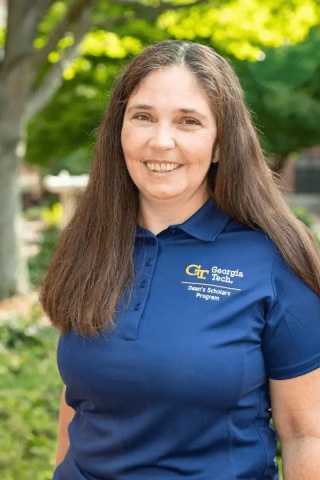
Most days you can find Kelly Griendling on campus preparing the next generation of engineers. She serves as a lecturer in Georgia Tech’s Daniel Guggenheim School of Aerospace Engineering.
But 25 years ago, she was on campus for a different reason. She was only a few days into her first year as an aerospace engineering student at Tech when terror struck America.
“I was in class when the first plane hit the World Trade Center,” she said.
Her roommate informed her what had happened when she returned from class. She continued to have breakfast and returned only to find out another plane had hit the Trade Center’s South Tower. Her entire floor gathered around a common area television, waiting for any new details about what was happening. “Not too long after the second plane hit, Tech canceled classes for the day."
Worry and Fear
She tried contacting a friend in New York. “The phone lines were all down. There was no Facebook safe spot check-in to make sure everybody was OK; that didn’t exist.” Details remained murky, and that left many paralyzed with anxiety.
It was days before she and her classmates really got a handle on what had happened, and its magnitude. The realization that these attacks had been perpetrated by hijackers moved the general unease to worry and fear. “Oh my gosh, we’re going to have a war now and what does that even mean to have a war against a terrorist organization instead of a nation?” she remembered asking.
The Lasting Effect
Months after the attacks, Griendling also started seeing changes in her field of study.
“The immediate impact was on security,” she said. “The protocols have changed continuously since then, but they've never gone back to where they were pre-9/11.” She noted that changes in airport screening, air traffic control, and aircraft design continue to shape aviation today.
For those who don't have a memory of 9/11, Griendling associates that day with other notable events from history like Pearl Harbor and the Challenger disaster. “Every time you learn history, you learn about these turning points. I think 9/11 will have the same impact because it had such a dramatic shift on the way we lived, the way we handled foreign policy, the way we handled defense,” she said.
For Griendling and so many others, sharing those vivid memories, no matter how painful, is a way to hold true to the promise made 25 years ago to never forget what happened that day.
“You’re certainly not going to find anyone who’s unaware of what happened that day and the consequences that it had.”
9/11: 25 Years On
Join the Sam Nunn School of International Affairs on Wednesday, Sept. 16, for 9/11: 25 Years On, a retrospective look at how the tragedy of the World Trade Center irrevocably changed US policy, both foreign and domestic. The conversation will feature two Nunn School Distinguished Professors of the Practice: General (ret.) Philip Breedlove will discuss the evolution of U.S. military policy, while the Hon. John Tien will discuss homeland security.
More Information
The 20th Anniversary
Hear reflections from Arad, Breedlove, and Griendling from 2021, marking the 20th anniversary of the September 11 attacks.
Michael Arad
Philip Breedlove
Kelly Griendling
Credits
Writer: Steven Norris
Photos: Getty Images, Brice Zimmerman
Videography: Brice Zimmerman, Steven Norris, Evan Atkinson
Design: Brice Zimmerman