
Plant Library Growing On Students
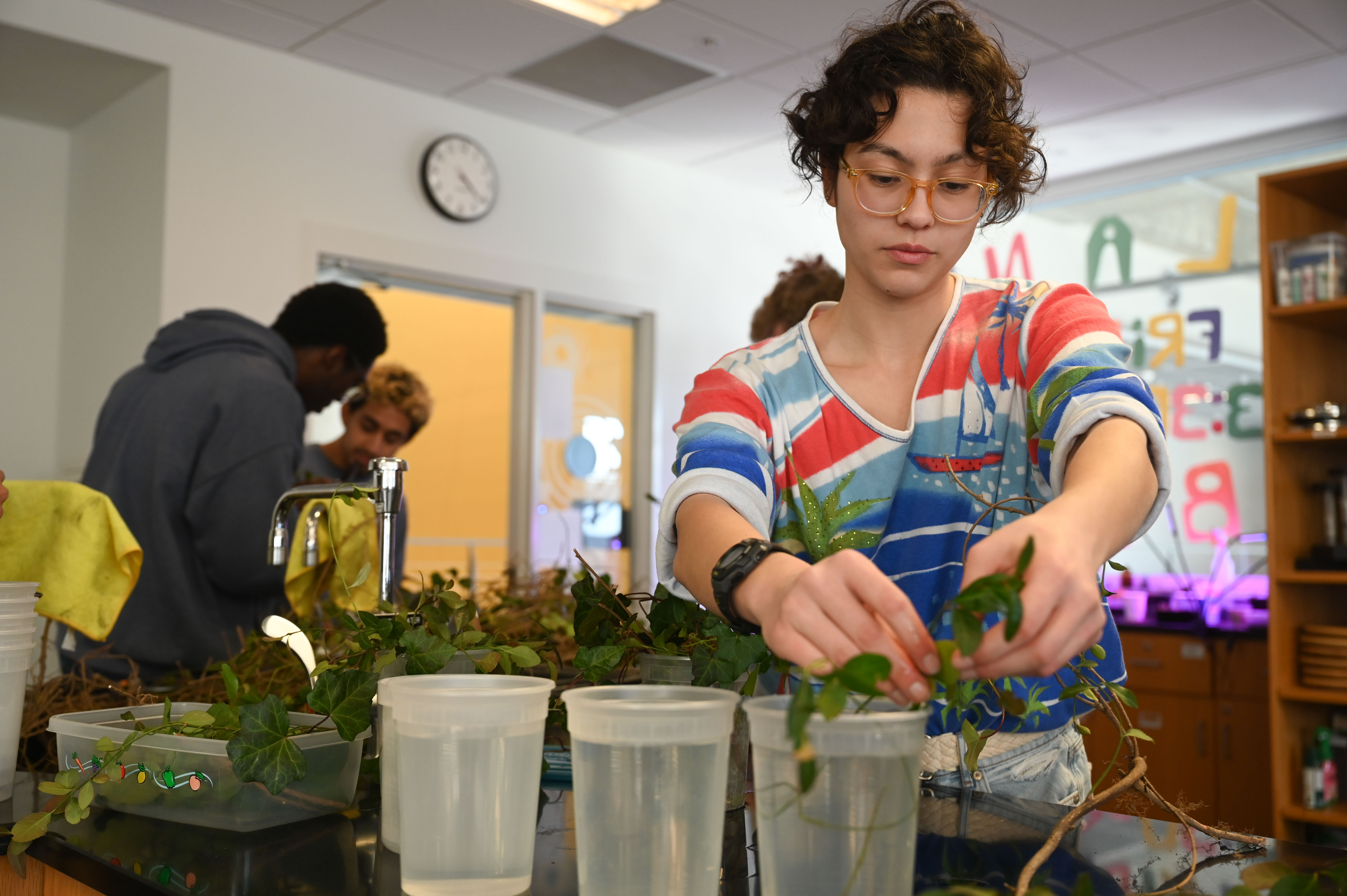
Students participate in the Plant Library, held in the Clough Undergraduate Learning Commons at Georgia Tech. Photo by Allison Carter.
Walking down the stairs in the Clough Undergraduate Learning Commons, you might look up to discover a set of letters made out of construction paper. Backlit by blue and red light, it reads, “Plant Library: Fridays 3:30 – 4:30”. This sign has caught the eye of many students, who walk inside to discover a bustling scene. Instead of books lining shelves, plants of all sorts are gathered in the windows, drinking in the sunlight. A group of students browses for a few moments before leaving with a plant of their own to nurture. The majority are gathered around a table, cutting up English ivy to propagate in recycled containers.
The plant library began as a collection of plants in a Clough Commons lab, but as of Fall 2025, it developed into a weekly event, inviting students to learn environmental concepts and spend the hour connecting with other students.
“We have a lot of people who come through,” said Liana Boop, senior lecturer in the School of Earth and Atmospheric Sciences and manager of the plant library. “Some of them are taking a plant and leaving. Some of them want to talk about plants, but also a lot of people just really want to get their hands dirty.”
Each plant has a story behind it. Some come from students or faculty who find themselves unable to keep up with their own houseplant and hope it can find a home somewhere else. Others come from around Tech’s campus as part of invasive species removal. And, at times, they’ve come from the Atlanta Botanical Garden.
Working with the Botanical Garden as they took down their holiday display, Boop filled a car with white orchids and commercial-grade pots. At the plant library, the orchids were gone almost instantly. Seeing the enthusiasm for the program, Boop expanded plant library access to any interested students.
One Friday, the plant library rooted propagations of English ivy that Students Organizing for Sustainability had collected from around The Kendeda Building for Innovative Sustainable Design. They put the plant cuttings in jars of water, hoping they would multiply for students to take home. It had become more than just yard work. It was a space to meet new people and, even if they were new to propagation, at least they weren’t the only ones.
“We want this to be a space for people to come in and relax and get a plant, or not get a plant, but just, you know, get some dirt under their fingernails and have fun. And I think it’s a nice way to end the week,” Boop said.
Students entered with the stresses of midterms and college life, but over the course of an hour, that began to fade. Those who entered the library out of curiosity began exploring new environmental concepts and plant propagation and discussing them with fellow newcomers.
While the plant library is associated with the lab for EAS1600, any student who goes practices principles of environmental science, through the recycled pasta jars and rescuing a plant that may have been left to die. Even beyond that, each student has helped a plant to grow. This fall, the EAS1600 Honors section will steward the program before the Majors section takes over in the spring.
Boop explained her approach. “I'm taking my Friday afternoon. I could be sitting on my couch watching Netflix,” she said, but “I'm going to plant some plants. I don't know who they're going to go to, but think about how many individual cuttings your hands touched. That's a lot of plants, right? And so, when we keep coming back, when we keep taking care of them — your actions matter, and they can put a smile on somebody's face.”
Additional Media
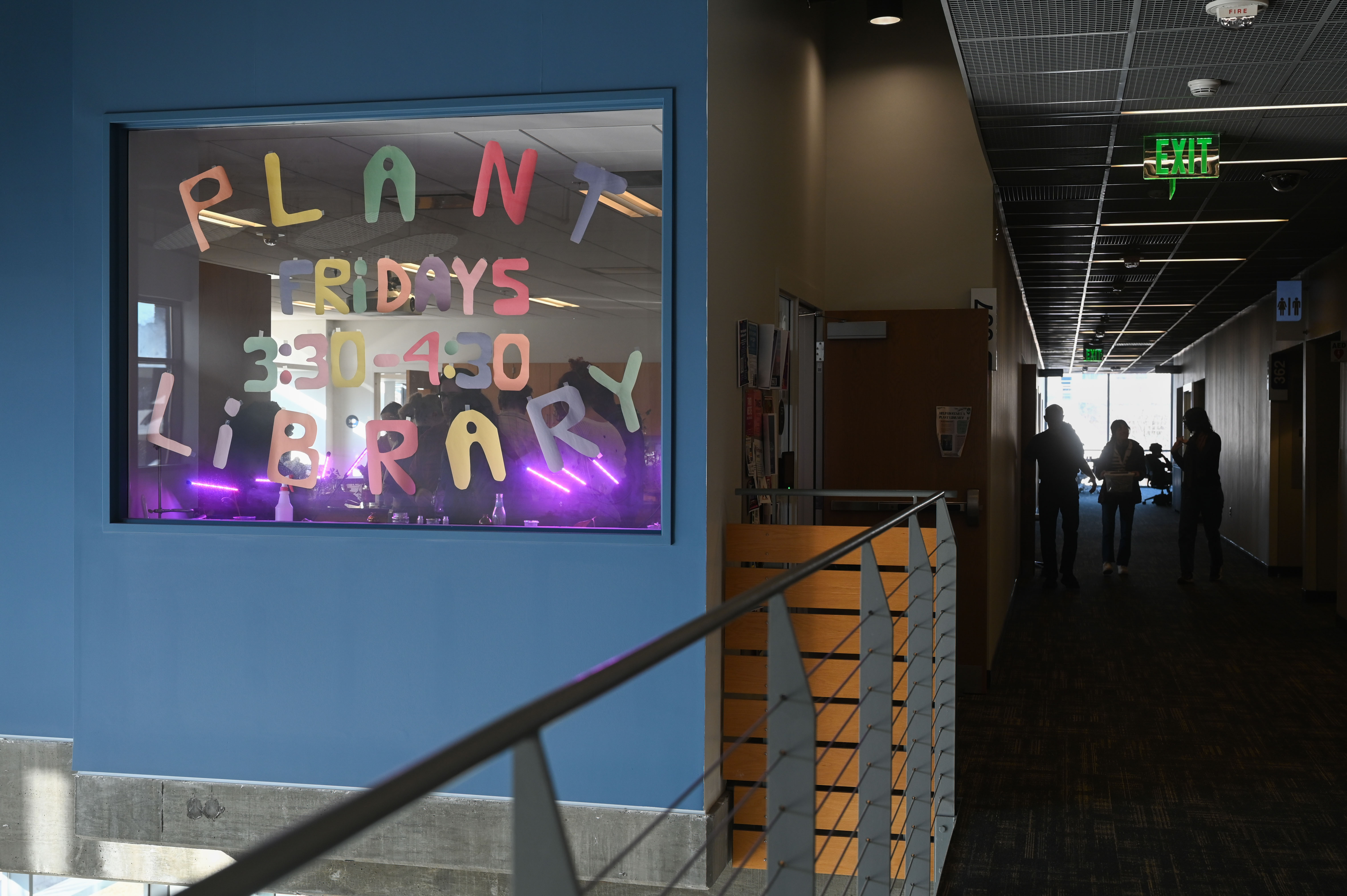
The Plant Library sign in the Clough Undergraduate Learning Commons.
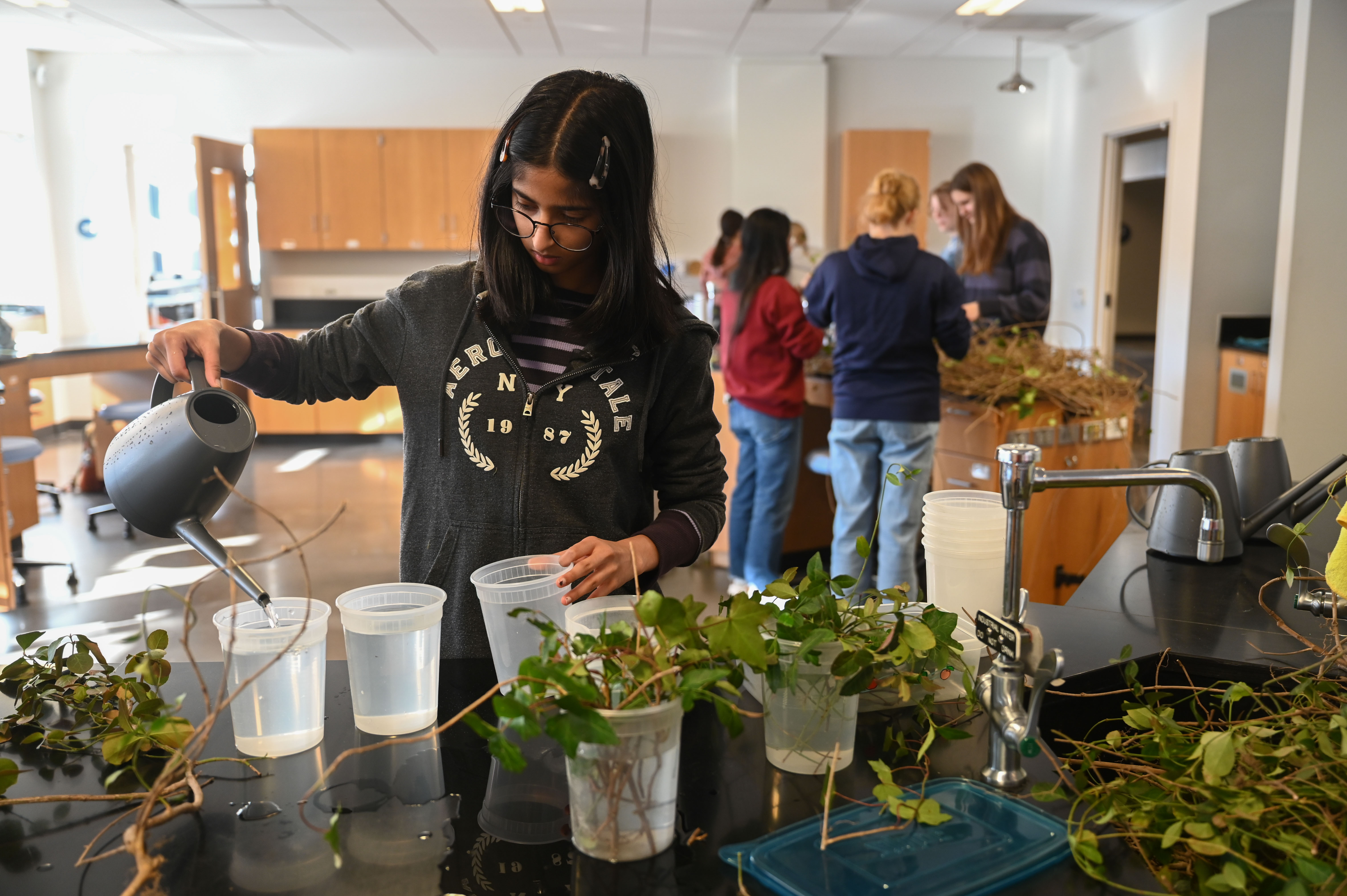
Students participate in the Plant Library.
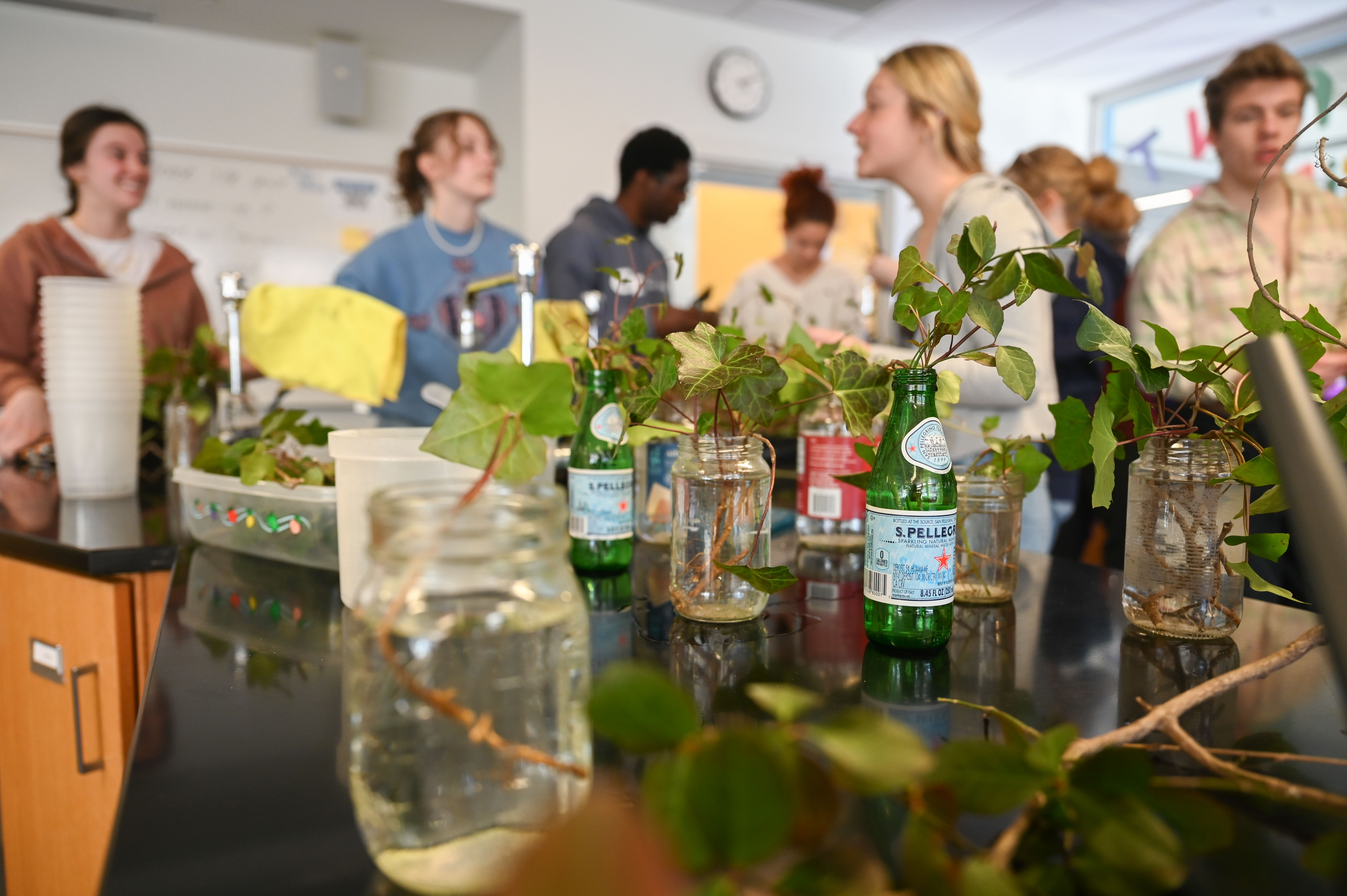
Students participate in the Plant Library.