
Meet the Interior Designers Elevating the Georgia Tech Experience
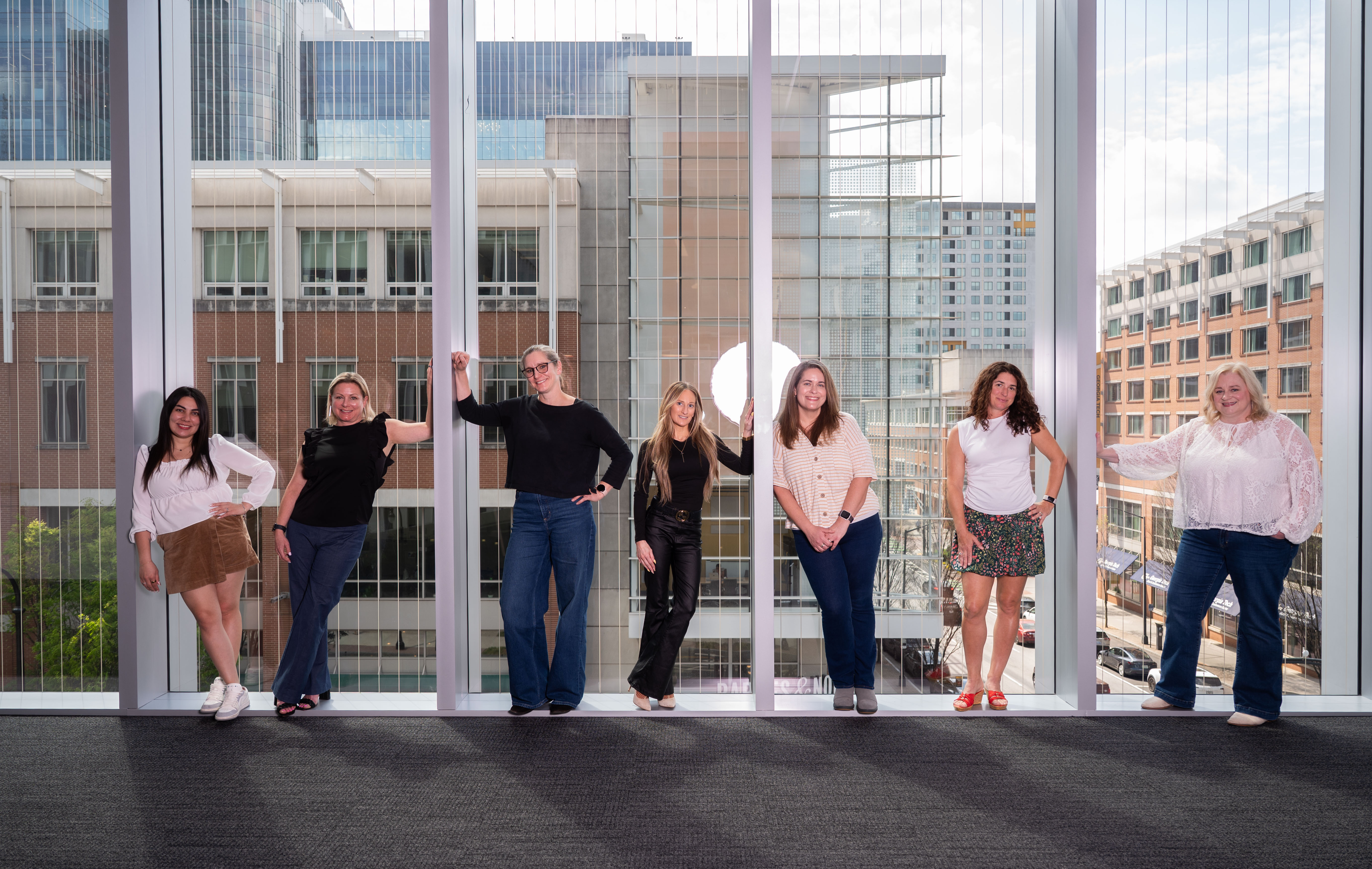
The interior designers shaping the campus experience. (L-R) Alexandra Gutierrez, Stacy Laux, Becky Williams, Sarah Vaillancourt, Christie Berkowitz, Polly Patton, Reagan Donley. Photographed on the third floor of the George | Scheller Tower by Allison Carter. March 2026.
Interior design in higher education goes far beyond aesthetics. At Georgia Tech, it plays a critical role in shaping how students learn, collaborate, live, and feel on campus. From classrooms and labs to student centers, offices, and shared spaces, thoughtfully designed interiors quietly support the Institute’s mission every day.
That impact is driven by a talented team of interior designers — Christie Berkowitz , Reagan Donley, Alexandra Gutierrez, Stacy Laux , Polly Patton, Sarah Vaillancourt, and Becky Williams — whose combined experience spans decades and whose work touches nearly every corner of campus. While their backgrounds and approaches vary, they are united by a shared commitment to people, collaboration, and meaningful design in higher education.
Designing With Purpose
Across campus, interior design is often shaped by historic buildings, fixed timelines, tight budgets, or sometimes, small footprints. Rather than limiting creativity, these constraints often elevate it.
For Sarah Vaillancourt, those challenges sharpen her design thinking. One of her favorite projects, a graduate student space designed to foster creativity and collaboration, used flexible seating, modular furniture, bright accents, and natural elements to support multiple ways of working. “The offices and spaces can sometimes be a constraint,” she said. “That pushes creativity.” More importantly, the project reinforced her belief in design’s influence on mindset and behavior. “I wanted to design a space that not only looked appealing but also supported students’ creativity and productivity.”
That focus on everyday impact resonates with Christie Berkowitz, who joined the Institute in 2023. Her favorite projects have been classroom renovations — spaces that may not stand out visually but make an immediate difference. “While they might not be the flashiest spaces on campus, they have an immediate, profound impact on the student experience,” she said. Transforming older classrooms into modern, active‑learning environments embodies her belief that good design is grounded in function.
Reagan Donley, who has been at Georgia Tech for more than 11 years, approaches every project with the same philosophy. “When I’m designing or managing the design of a project, I always try to make sure a space functions like the users need it to and is the best design solution to meet those needs,” she said. Her work balances form, function, long-term institutional goals, maintenance considerations, and historic preservation, often simultaneously.
Collaboration at the Core
Interior design in higher education is inherently collaborative, and every designer emphasizes the importance of teamwork, communication, and trust.
For Alexandra Gutierrez, communication is foundational. “Starting conversations with the right stakeholders and understanding the scope and budget early on helps keep the project moving smoothly,” she said. That approach guided her favorite projects, the Skiles and A. French breakrooms, where she was able to design the spaces from start to finish.
Becky Williams, who previously worked at a design firm with Georgia Tech as her client for almost a decade, enjoys being on the other side of the table. She views design as a collective effort. “I’ve always viewed a project as a ‘we’ effort, we’re all working toward the same goal, and we get there faster and better when we support each other,” she said. Her favorite project, Tech Square 3 (George Tower | Scheller Tower), stood out for its scale and complexity and for the opportunity to help guide the project from the owner’s side.
That spirit of coordination defined one of Donley’s most meaningful projects, a renovation for the Office of Undergraduate Education in the Clough Undergraduate Learning Commons. With rigid funding and scheduling constraints, success depended on collaboration across campus. “We had to pull all the strings to get the project finished in time,” she said. “It was a privilege to help them meet their goals.”
Spaces That Reflect the People Who Use Them
While collaboration shapes the process, people remain at the center of every design decision.
For Stacy Laux, design begins with listening. “A workspace should feel like the person who uses it—not the designer behind it,” she said. Her favorite project, Science Square, stood out because “everything clicked.” The success of the project came not just from the outcome, but from a team aligned around a shared vision.
Her greatest inspiration comes from witnessing user connections firsthand. She tries to understand how the user moves through their day, what gives them energy, and what helps them unwind. She observes little habits and routines, which then inform her design process. “There’s nothing better than seeing someone walk into a finished space and instantly feel like, ‘Yep ... this is me,’” she said. That moment, she explained, is why design matters.
Polly Patton’s nearly 19 years at Georgia Tech make her one of the team’s longest-tenured designers. For her, that user connection begins face‑to‑face. “I like to meet in person with my end‑user clients and listen to their needs before starting to formulate a design,” she said. Her favorite project, the John Lewis Student Center renovation, reflects that philosophy at the largest scale. “It’s the heart of the campus and is used by all students,” she noted, making it especially meaningful.
Where Inspiration Begins
For these designers, inspiration comes from many places: the campus community, the design process itself, and sometimes it’s personal.
“First and foremost, the students,” Patton said. “Designing spaces to make their time here at Georgia Tech more enjoyable inspires me to work harder.”
Donley finds inspiration in color and in helping users solve challenges—whether through furniture, layout, or budgets. She enjoyed the Clough project because of the challenge of it being a significant change to the organization of the space.
Berkowitz is “driven by building the strong structural foundations that allow us to execute our jobs at a higher level,” finding inspiration in systems and processes, building tools, and standards that allow the team to work more effectively.
For Gutierrez, inspiration is personal. “My dad inspires me not to give up, and my faith pushes me to be better in everything I do.”
Growing up in a family of educators, Williams also draws creative energy from her family. She realized at a young age that drawing floor plans and rearranging her room was more fun than lesson plans. Additionally, the variety of work appeals to her. One week she could be designing a lab, the next, a collaborative space, then followed by something that feels more like a corporate office.
Higher Education Design Matters
Thoughtful design fosters a sense of community and creates engaging learning and work environments.
“Higher ed allows me to turn ideas into environments that support creativity, productivity, and well-being,” Vaillancourt said.
For Berkowitz, it’s about shared purpose. “Being able to tangibly support the day-to-day success of the campus community is what makes higher education special.”
Donley points to how campuses have evolved. “Now campuses are about the whole experience of the students,” she said. “Furniture and AV components have become the main characters of these experiences.”
Patton echoed that variety and impact. “Higher education is a great mix of lots of different types of design,” she said — from housing to learning to dining, plus athletics, and even retail — offering endless opportunities to shape experience.
“When a team is this strong, it becomes its own creative ecosystem,” Laux said. “You’re not just designing spaces anymore. You’re shaping experiences together. And when you’re surrounded by people who lift your ideas higher, challenge you in the best possible ways, and celebrate every win right alongside you, your own creativity just expands. It’s the kind of environment that keeps you energized and excited to show up every day.”
At Georgia Tech, that ecosystem is one built on collaboration, purpose, and a shared belief that design has the power to elevate the entire campus experience.
Additional Media
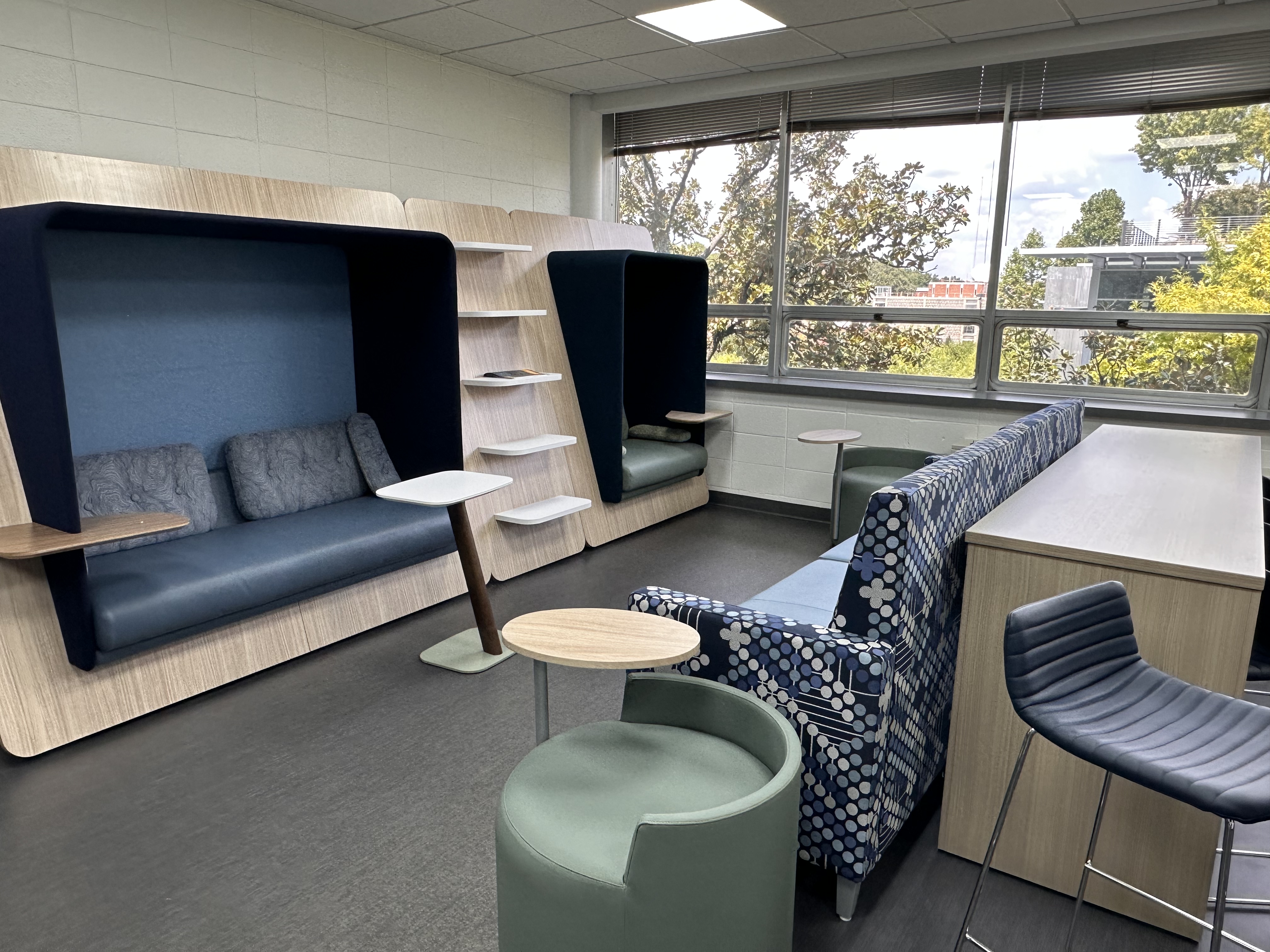
Photo of the interior design of a Skiles Classroom Building breakroom.
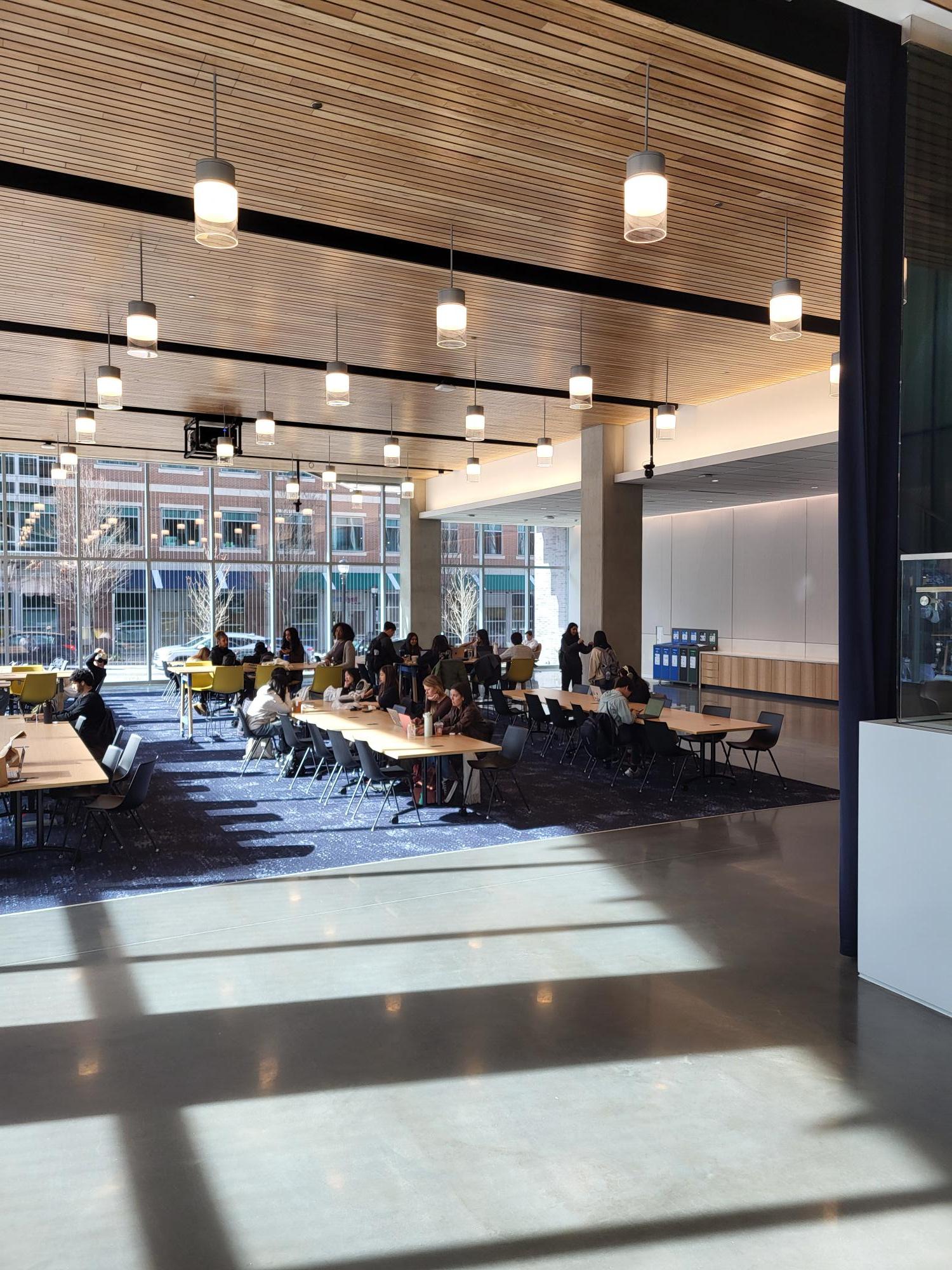
Image of the light-filled main floor of the George Tower | Scheller Tower Building.
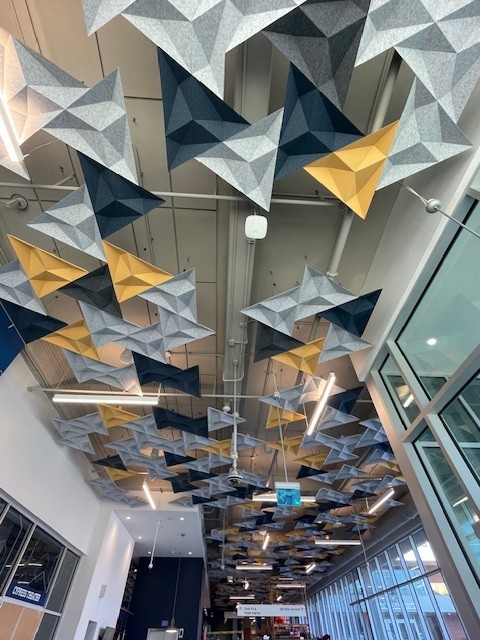
Image of the design of the acoustical panels in the John Lewis Student Center.
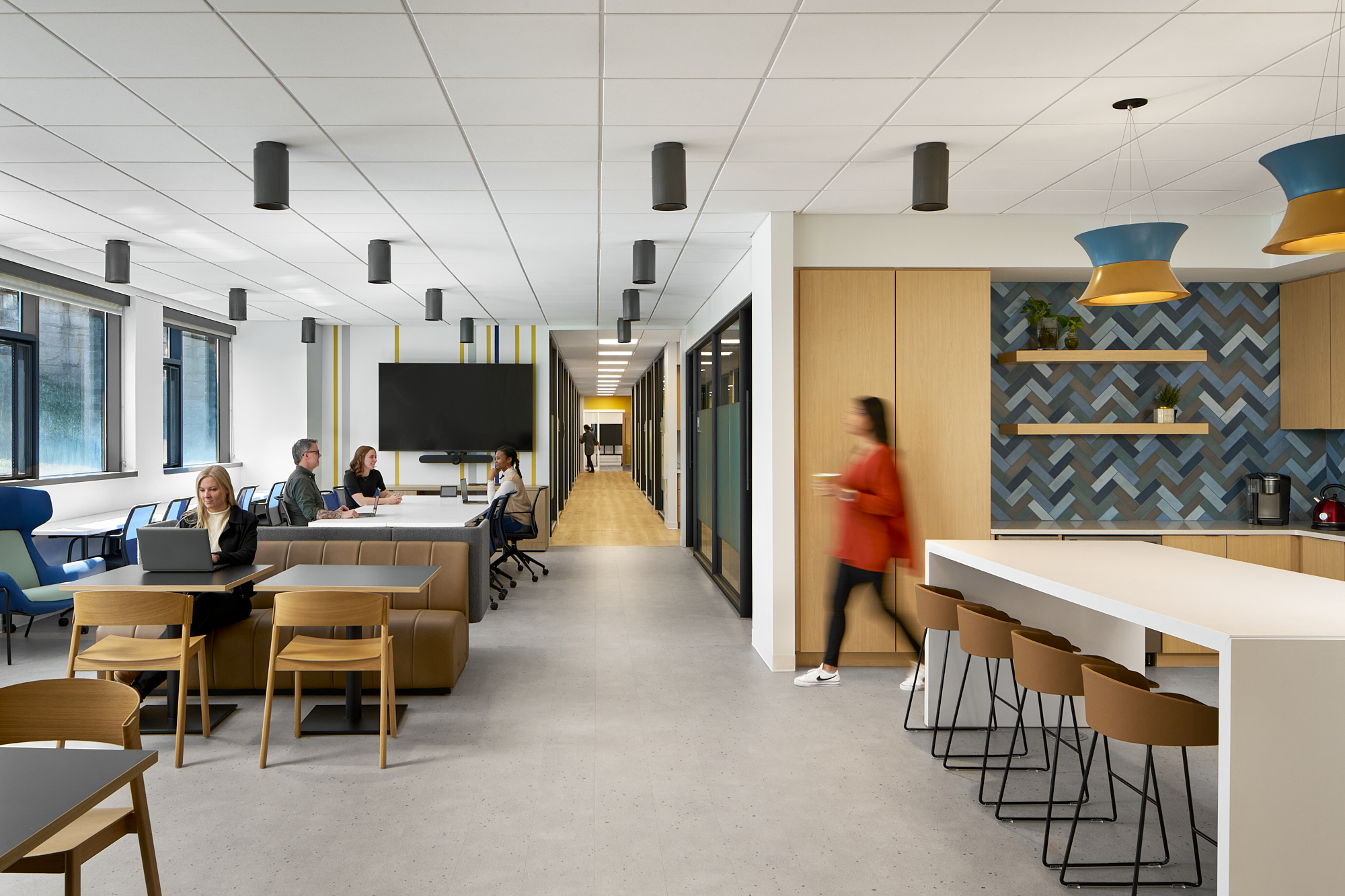
Image of the Office of Undergraduate Education in Clough Undergraduate Learning Commons.