
Georgia Tech Bird Flu Vaccine Project Lands $2M From USDA
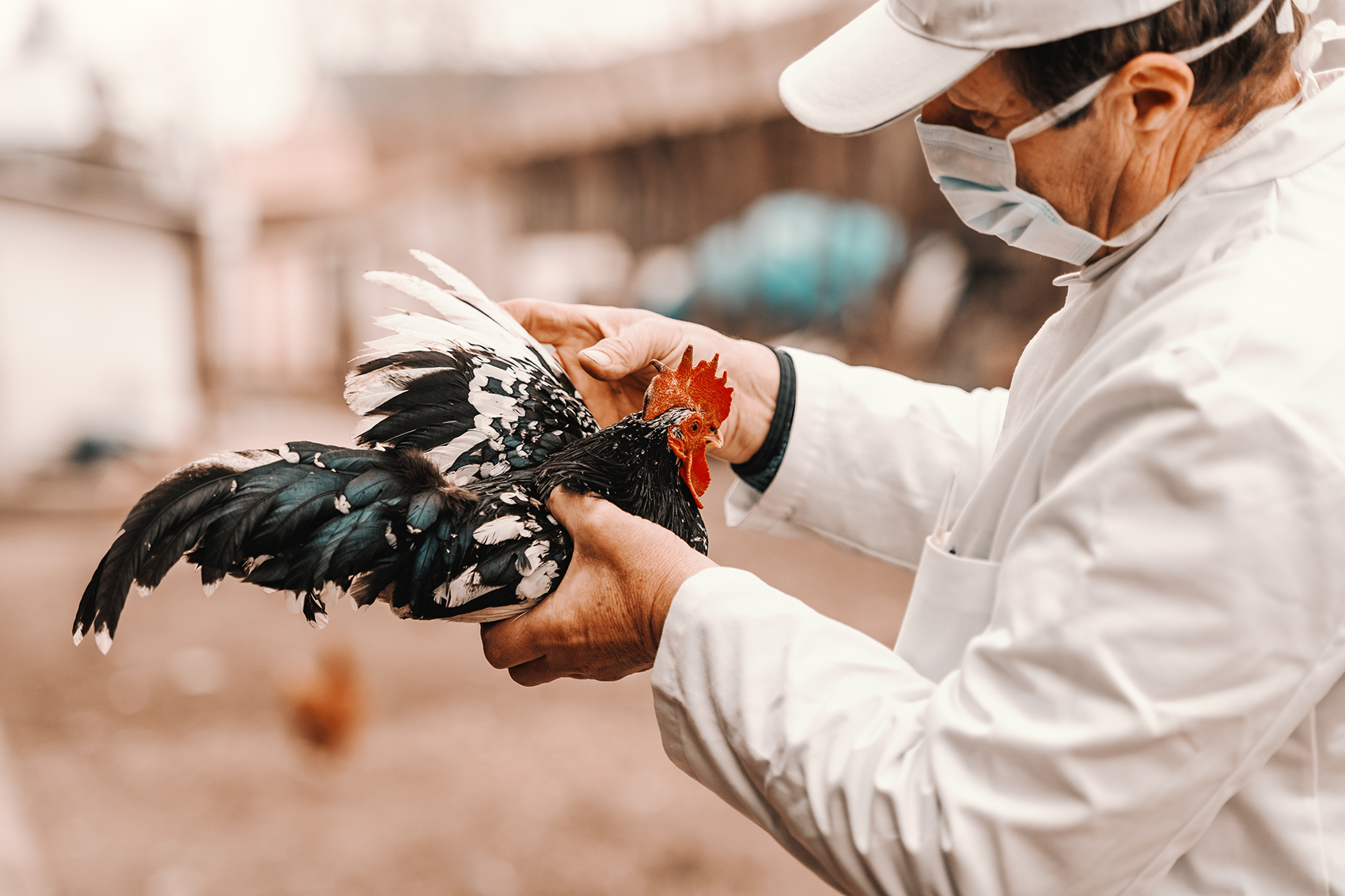
Georgia Tech researchers are working on an oral bird flu vaccine that could transform poultry vaccination. (Credit: Adobe Stock)
The United States Department of Agriculture (USDA) has awarded $2 million to a team of Georgia Tech and Georgia Tech Research Institute (GTRI) researchers to develop a first-of-its-kind vaccine pill for bird flu.
For decades, bird flu was uncommon in the U.S., but that has changed. In the past several years, epidemics have threatened poultry and dairy cattle operations across the country. Higher egg prices, driven largely by bird flu-related supply disruptions, have cost American consumers billions of dollars in losses.
“The H5N1 strain of the bird flu, which has driven recent and current outbreaks, is a highly lethal virus that kills domestic chickens and other bird species in droves,” said David Pattie, GTRI research scientist and branch chief. “It can easily jump from birds to other animal species — and sometimes to humans.”
The research team will leverage artificial intelligence (AI) to design and test a probiotic avian flu vaccine that, if successful, could be served to chickens in their feed. Currently, vaccinating a flock means individually injecting every bird.
“We’re focusing on live bacterial vaccines, which means the vaccine comes from living bacteria you swallow, instead of an injection,” said Mike Farrell, GTRI principal research scientist and the project’s lead investigator.
“These probiotic vaccines would help protect birds and livestock from flu-like infections and lower the risk of those viruses spreading to humans,” he added.
In addition to Farrell and Pattie, the team includes researchers from an array of disciplines across the Institute: Faramarz Fekri, professor and John Pippin Chair in the School of Electrical and Computer Engineering; JC Gumbart, Dunn Family Professor in the School of Physics; Brian Hammer, associate professor in the School of Biological Sciences; and Anton Bryksin, director of the Molecular Evolution Core at the Parker H. Petit Institute for Bioengineering and Bioscience.
Building on Human Influenza Research
The project builds on Farrell’s ongoing research into developing probiotic vaccine adjuvants for human influenza. The goal is to use probiotic bacteria — the “good bacteria” found in foods like yogurt — to help create immunity for the flu vaccine.
If the researchers can get probiotic bacteria to display pieces of the flu virus (called antigens) on their surface, then they could be swallowed like a normal probiotic pill.
“The gut is a great place for building immunity. When these bacteria reach the gut, your body would recognize the virus pieces on the bacteria and start building flu antibodies,” Farrell explained. “That way, when the chickens get exposed to flu, their immune system would already be prepared to fight it.”
Putting AI to the Test
“The idea behind this oral bird flu vaccine is to leverage artificial intelligence and the vast historical database for H5N1 available to us, because it's a very well-studied virus,” Farrell said. “There is a ton of structural data out there.”
Gumbart is an expert in protein modeling and simulation. Part of his role is figuring out the best design for a viral protein piece (antigen) — one that looks and behaves like the real virus protein, so it triggers the right immune response. To do this, he will combine Fekri’s AI-generated predictions with computer modeling.
“That’s where my team adds real value,” Gumbart said. “We use simulations to test how stable and realistic these protein designs are, which allows us to choose the best ones for lab experiments.”
AI has already identified new medicines and antibiotics by studying chemical databases. If the team can use AI to help design virus proteins for vaccines, it could transform how vaccines are made.
Pattie says that any viral infectious disease with a high mortality rate has the potential to become a national security threat. “At that point, developing countermeasures becomes exceedingly important from a national security perspective,” he said.
This is the first time several of the team members are working on poultry research. For Gumbart, the project is a full-circle moment.
“I grew up in rural Illinois, and as a kid, one of my daily chores was to take care of chickens, and I kind of hated it,” he said. “It is some sort of universal irony that I am back to taking care of chickens again.”