
RoboRambler Expanding Culture of Innovation in Robotics
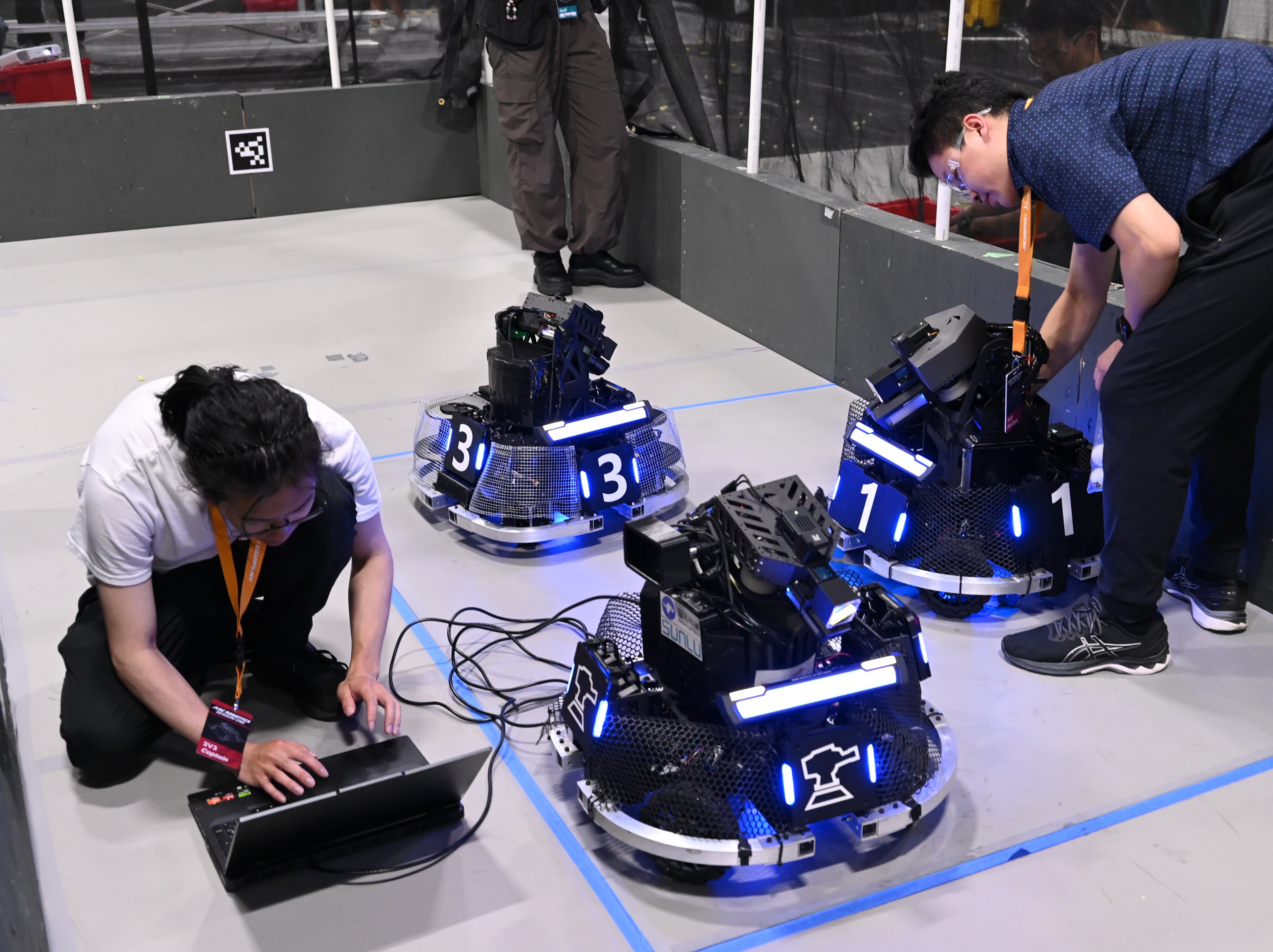
Matthew Zhou and another RoboRambler member work on their fleet prior to the 2026 ARC Championship. Submitted photo.
RoboRambler is one of Georgia Tech’s newer student robotics clubs, but just two years after its creation, the team is making a name for itself on a national stage.
At the 2026 ARC Championship — a simulated robotic combat tournament designed to test students’ engineering and strategy skills — RoboRambler took second place out of 30 universities from around the world in the 1v1 knockout category. The team also secured a top-10 finish in the 3v3 challenge.
The robots used in the competition are the latest iteration of the machines first designed by mechanical engineering student Matthew Zhou and computer engineering student Zimeng Chai in a dorm room in 2024. The robots have four sides of armor, a turret, a drive chassis, and are operated through a first-person-view (FPV) control system as part of the competition’s MOBA (Multiplayer Online Battle Arena)-style gameplay. Using lessons learned from previous tournaments, Chai and the software team implemented new autonomous aiming and navigation algorithms, while Zhou and the mechanical team upgraded the robot's systems and added carbon fiber elements to make it lighter and stronger for 2026.
While these improvements played a role in the team’s success, Zhou credits their driver, Nathaniel Phelps, for the podium finish at the competition, held at Purdue University in July.
“A year ago, we were in 15th place in the middle of the pack, and a lot of teams wondered how we improved so quickly. While we made changes to the robot and its technical performance, we really do have one of the best drivers,” Zhou said.
The team has expanded to 30 members in its first two years, and as Zhou prepares to graduate in the spring, he is proud to see how the Georgia Tech community has embraced the RoboRambler. He believes their growth will continue, noting that the team has secured a lab space in Tech Square, with support from Associate Professor Matthew Hale, Assistant Professor Harvish Ravichandar, postdoctoral fellow William Warke, and the CORE Lab of the School of Electrical and Computer Engineering.
As Zhou steps back from day-to-day operations and incoming president Albert Wang, an electrical and computer engineering student, takes over, the club is focused not only on the 2027 competition but also on expanding a culture of creation across Tech’s robotics clubs. As the club continues to build out its lab space, Wang invites others to use its resources to improve their designs.
“We just love building things. We want to get our hands dirty and build something that comes from our own work. In the process, we innovate, solve problems, and come up with solutions others can’t. The workspace we’re building will help us do that and support other robotics student organizations as they chase their own ambitious goals,” he said.
As RoboRambler gears up for its next competition, recruitment continues. Though the team is made up primarily of engineering students, Wang says every new member receives the same training, so all students interested in robotics are welcome to join.
Additional Media
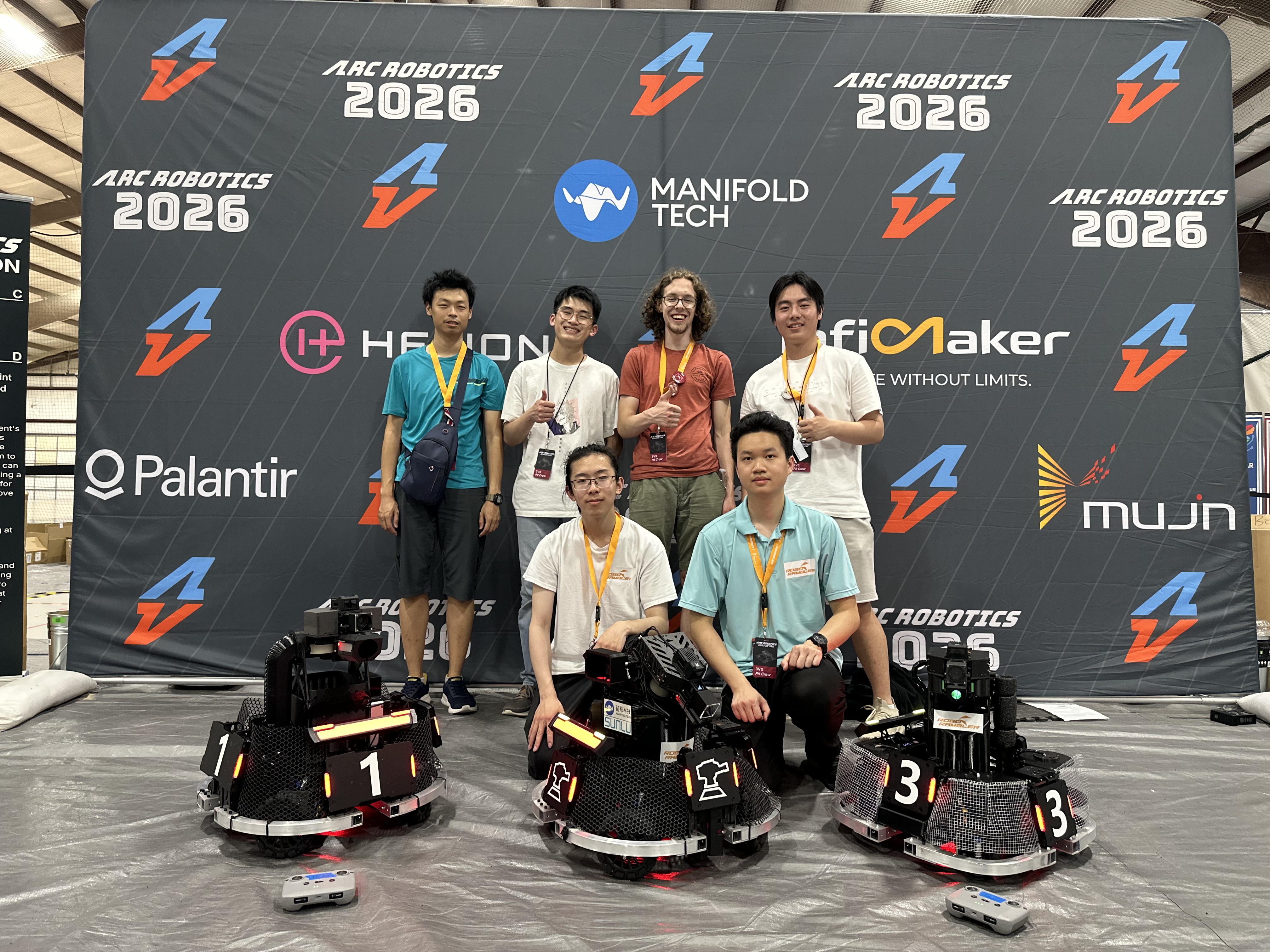
The RoboRambler team at the 2026 ARC Championship. Submitted photo.