
Building With Purpose: Sustainability and Stewardship at Georgia Tech
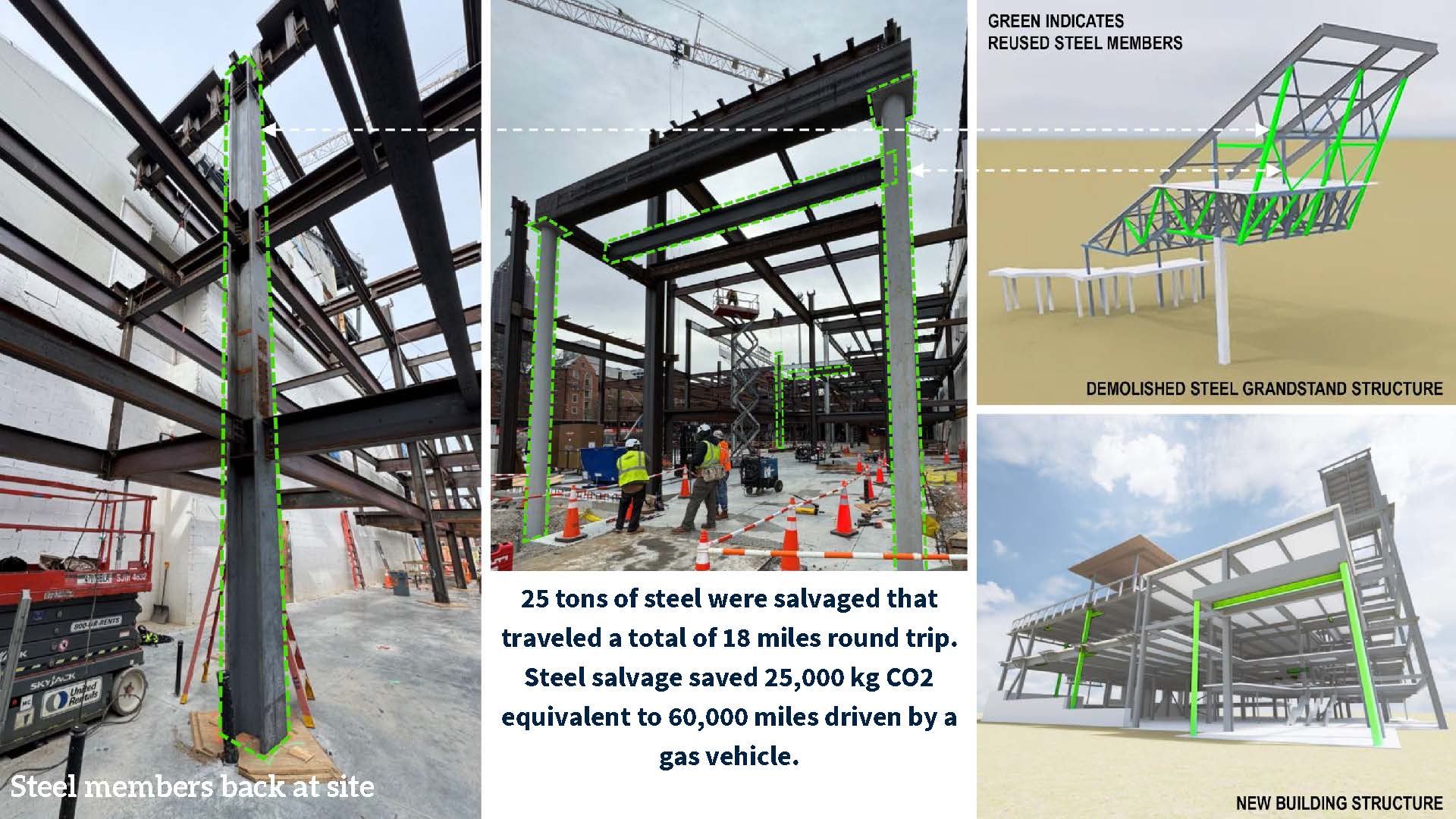
Original steel framing from the Edge-Rice Building was used in the construction of the Thomas A. Fanning Student-Athlete Performance Center.
Sustainability at Georgia Tech is built into the standards that guide how the Institute designs, constructs, renovates, and operates its campus facilities.
Georgia Tech’s Yellow Book outlines those standards and, along with other design and construction guidelines, establishes sustainability and responsible stewardship as fundamental considerations in the built environment. The standards set expectations for high-performance buildings, including LEED certification, energy and water efficiency, responsible material selection, recycling infrastructure, building commissioning, and measurement of long-term performance.
The Planning, Design, and Construction department is currently updating the Yellow Book, building on these standards and ensuring that the guidance continues to support Georgia Tech’s evolving needs and priorities.
“At Georgia Tech, innovative sustainable design is fundamental to how we plan for the future of our campus,” said Institute Architect Dan Nemec. “We have a responsibility to be thoughtful stewards of our resources, and that means considering a building’s performance, materials, environmental impact, and long-term value from the very beginning. By incorporating sustainability into our planning, design, construction, and renovation standards, we can create environments that serve the Georgia Tech community today while positioning the Institute to meet the needs of generations to come.”
Planning, design, and construction teams evaluate energy performance and life-cycle costs; look for opportunities to conserve water; assess the embodied carbon and health impacts of building materials; incorporate spaces for recycling; consider salvaging, refurbishing, and repurposing materials; and use metering and commissioning to make sure building systems perform as intended.
Tech’s most recent, high-profile projects, the Thomas A. Fanning Student-Athlete Performance Center, the Bud and Val Peterson Residence Hall, Brittain Dining Hall, and George Tower | Scheller Tower show that sustainability standards are relevant to all sectors of campus, from athletics and housing to dining and academics.
Repurposed Support for Athletics
The Edge-Rice Building stood at the corner of Bobby Dodd Way and Techwood Avenue for 42 years. In demolishing this building and implementing advanced deconstruction planning and careful structural identification, the Thomas A. Fanning Student-Athlete Performance Center project salvaged 25 tons of structural steel from the existing facility and adjacent grandstands.
Some of the original framing and truss steel was carefully salvaged, transported, tracked, and refurbished at a fabrication shop 9 miles from campus. What was once structural support of the Edge-Rice Building can now be seen as entryway columns at the Bobby Dodd entrance to the new facility.
This circular approach eliminated the need for new raw material manufacturing, saving 25,000 kilograms of CO2 emissions — the environmental equivalent of driving 60,000 miles in a gas vehicle — and turning carbon reduction goals into tangible environmental achievements.
Creating a High-Performance Home for Students
The Bud and Val Peterson Residence Hall was designed to meet growing housing demand while also supporting Georgia Tech’s sustainability goals. The new residence hall provides housing for first-year students and includes collaborative learning areas, community lounges, fitness amenities, and secure bike storage.
The building incorporates several sustainable design strategies, leveraging building orientation, massing, and a high-performance building envelope to improve energy efficiency. Stormwater and ecological design elements help extend Georgia Tech’s investment in campus greenspace and environmental health.
The building also prioritizes daylighting and material selection. More than 400 windows bring natural light deep into the interior, helping reduce lighting demands and cooling loads. Glue-laminated timber mullions were selected in place of more carbon-intensive aluminum components, reducing thermal transfer while utilizing a renewable resource.
These strategies demonstrate how thoughtful design can support student life while advancing Georgia Tech’s broader goals of resiliency and responsible campus growth.
Preserving a Beloved Dining Hall
By extending the useful life of an existing building while improving how it operates, the Brittain Dining Hall renovation project brings together preservation, responsible stewardship, and modern building performance.
LED lighting upgrades and high-efficiency HVAC systems help improve energy efficiency, while water-saving kitchen and dishwashing operations support conservation in one of the building’s most resource-intensive functions. Energy-efficient equipment further reduces operational demands, and increased natural lighting makes greater use of daylight while creating a brighter dining environment.
These improvements illustrate an important aspect of sustainable campus development: Progress does not always require starting over. Thoughtful renovation can preserve the character and history of a beloved campus building while adapting it to serve today’s community more efficiently — and honoring the past while preparing campus spaces for the future.
Building for the Future of Innovation
In Tech Square, George Tower | Scheller Tower represents another example of sustainability woven into campus development. The two-tower complex was designed to bring together students, faculty, researchers, entrepreneurs, and industry partners in flexible spaces.
The construction of this building is setting a new benchmark for sustainable development at Georgia Tech. Designed as an all-electric, high-performance facility, the project is expected to use approximately 75% less energy than a comparable building while reducing its overall carbon footprint by more than 20%. Extensive daylighting and smart building systems will maximize occupant comfort while continuously optimizing energy and water use, supporting a lower-carbon future for campus operations.
The building is projected to use just 14% of the municipal water consumed by the average Georgia Tech facility, with 70% of its water needs supplied through captured and reclaimed rainwater. It also features glazing to help reduce bird strikes during migration, and 85% of the project’s construction waste was diverted from landfills.
The building has earned Georgia's highest four-peach rating under the Georgia Peach Green Building Rating System and recognition as Georgia's first LEED Platinum project. It is one of the most sustainable buildings on campus and a model for future development.
Stewardship Across Campus
While each facility serves a different purpose, they share a common theme: thoughtful stewardship of resources, illustrating how sustainability can be integrated into both daily operations and long-term capital investments.
Collectively, they reflect Georgia Tech’s ongoing commitment to being best in class while creating spaces that support learning, living, community, and innovation for years to come.
Additional Media
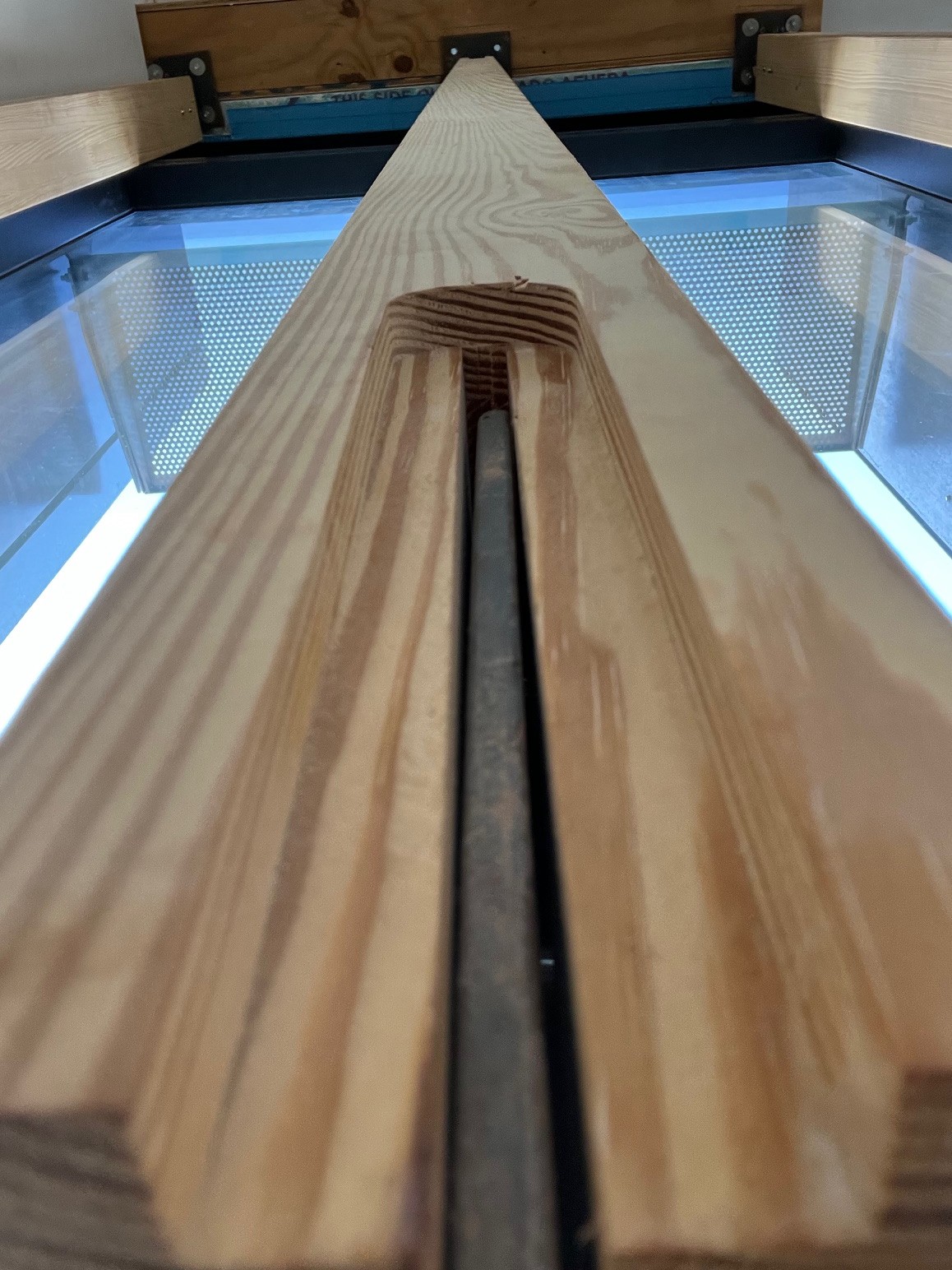
For the Bud and Val Peterson Residence Hall, glue-laminated timber mullions were selected in place of more carbon-intensive aluminum components, reducing thermal transfer while using a renewable resource.
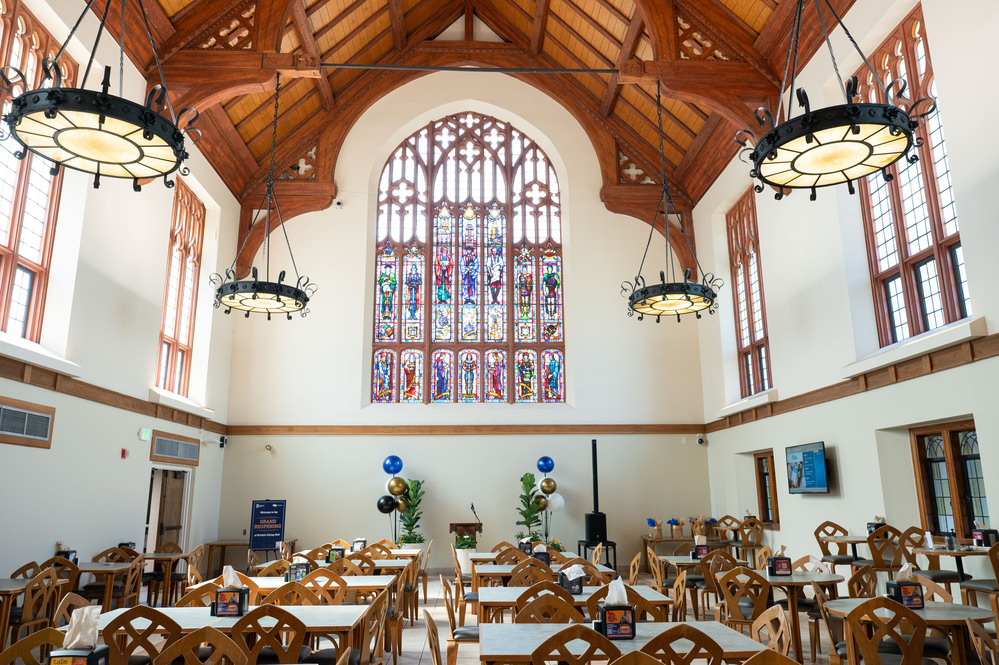
Greater use of daylight saves energy while creating a brighter environment in Brittain Dining Hall.
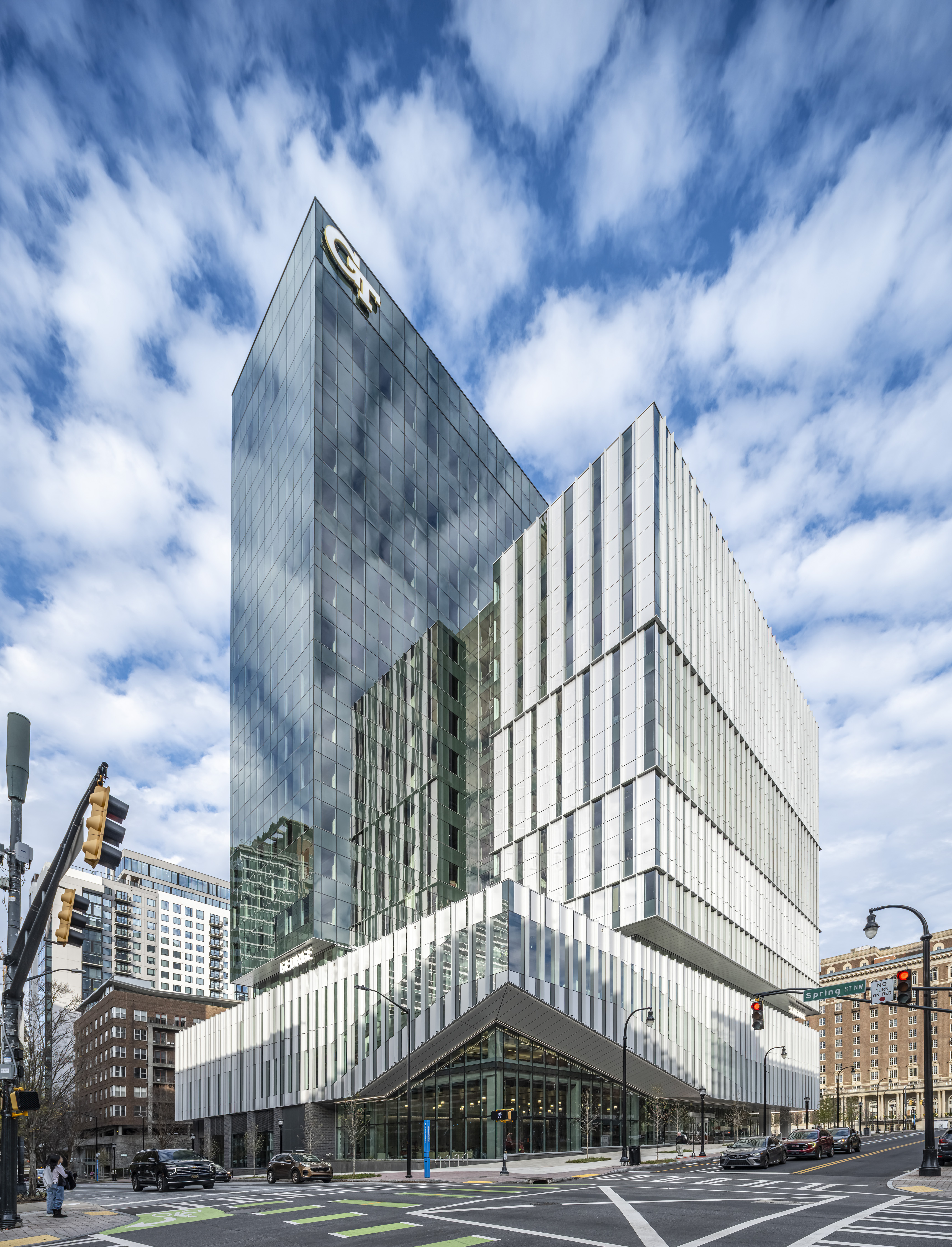
George Tower | Scheller Tower is projected to use just 14% of the municipal water consumed by the average Georgia Tech facility, with 70% of its water needs supplied through captured and reclaimed rainwater.