
Aerospace Student Designs Record-Breaking RC Jet
Tomas Salvo was 8 years old, growing up in Singapore, when he built his first remote-controlled plane. Now a fourth-year aerospace engineering student, his interest in planes and desire to innovate led him to build what could be the world’s fastest RC jet.
On Oct. 27, Salvo and his team conducted their latest test of the Reaper project — a plane initially designed in his dorm room. During the test, the jet demonstrated the ability to reach 790 kilometers per hour. Although unofficial, the speed surpassed the current record of 465.544 set by Niels Herbrich of Rothenburg, Germany, in 2017.
Salvo began the Reaper project in February after reconstructing an engine left behind by a student organization on campus. Though the group later reclaimed its engine, Salvo knew he could recreate the design and reached out to potential sponsors on social media with his vision. Within a month, he bought supplies to build the plane, the Jetcat P250 engine, and the railing needed to launch. Using the Aerospace Machine Shop and the CNC mill in the Invention Studio, Salvo cut the custom molds and crafted the aircraft's carbon fiber ribs.
This summer, he tested the craft while living in California for an internship with Skydio, an autonomous drone manufacturer. After a long day of testing in July, Salvo’s girlfriend posted Reaper’s flight on X before going to sleep. He woke up to the post gaining millions of views overnight. The post, which has now reached over 5.4 million users, changed his life in an instant and helped him realize the potential of his project.
“I woke up with messages from people in Ukraine asking if I could ship them, could we make more, how fast can it go, range, payload, and things of that nature,” he said. The post “did everything for me. Since then, investors have found me and asked what they can do to help.”
Since then, Salvo has been testing Reaper with payloads to simulate performance as a jet-powered drone interceptor. He claims the project is the fastest drone at its price point in the world and hopes to one day provide a defense solution that can combat drones in war zones.
As a child, he enjoyed taking the planes and helicopters his parents bought for him apart, putting them back together, and fixing what was broken. Today, as he refines his design, he approaches each test with the same mindset: ready to tackle whatever comes his way.
“Things won't always go right, and that’s how we make our design better: by learning from that,” he said.
Since his first test, Salvo and the team have modified the plane’s inlet and leading edges and implemented new avionics and new engine telemetry, making it more reliable at high speeds. He continues to iterate on the Reaper design, and after launching his first commercially viable aircraft, he intends to develop a supersonic aircraft in the coming months that he says may feature propulsion technology never before seen on a drone this size.
Additional Media
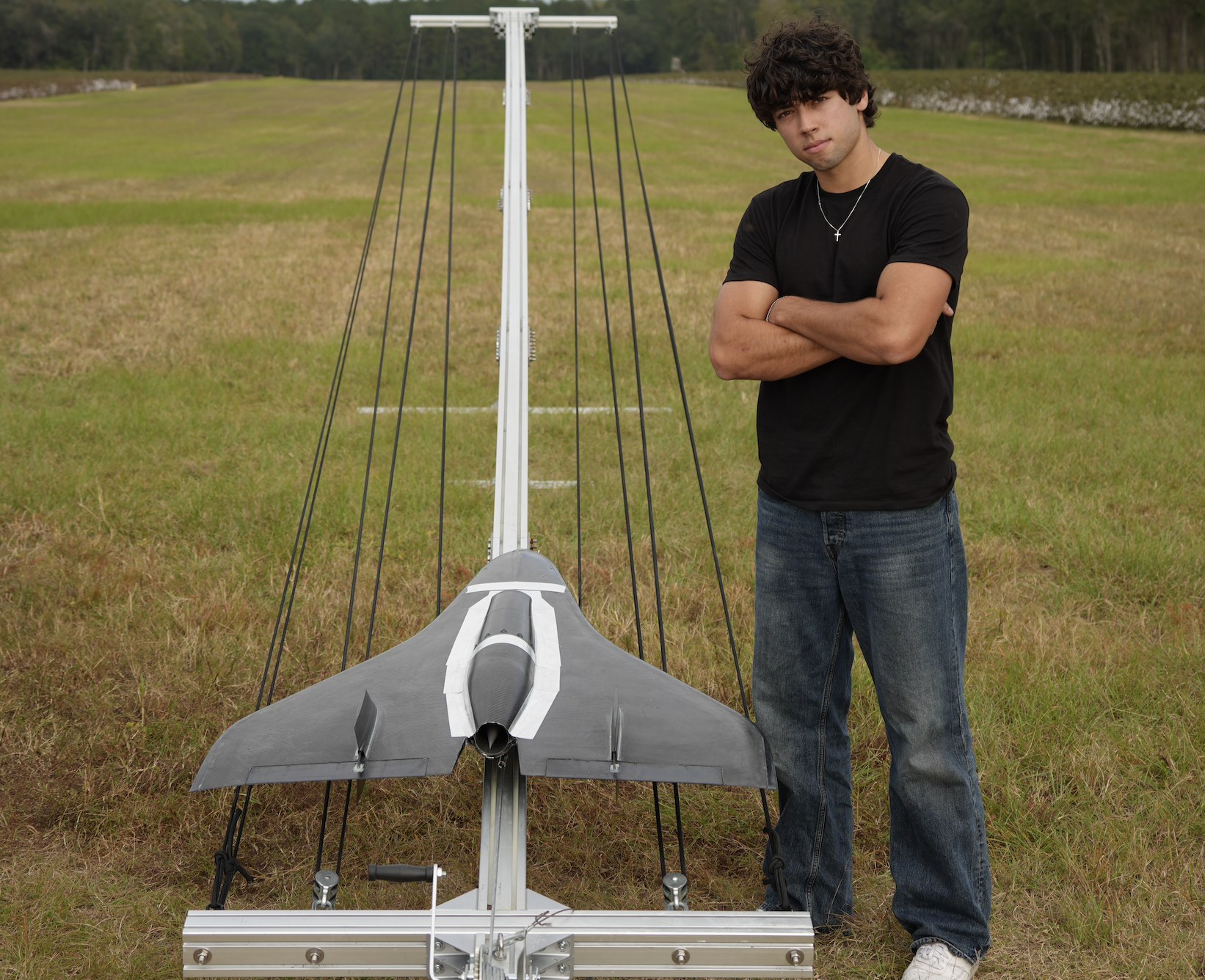
Georgia Tech aerospace engineering student Tomas Salvo stands beside the Reaper RC jet prior to testing.
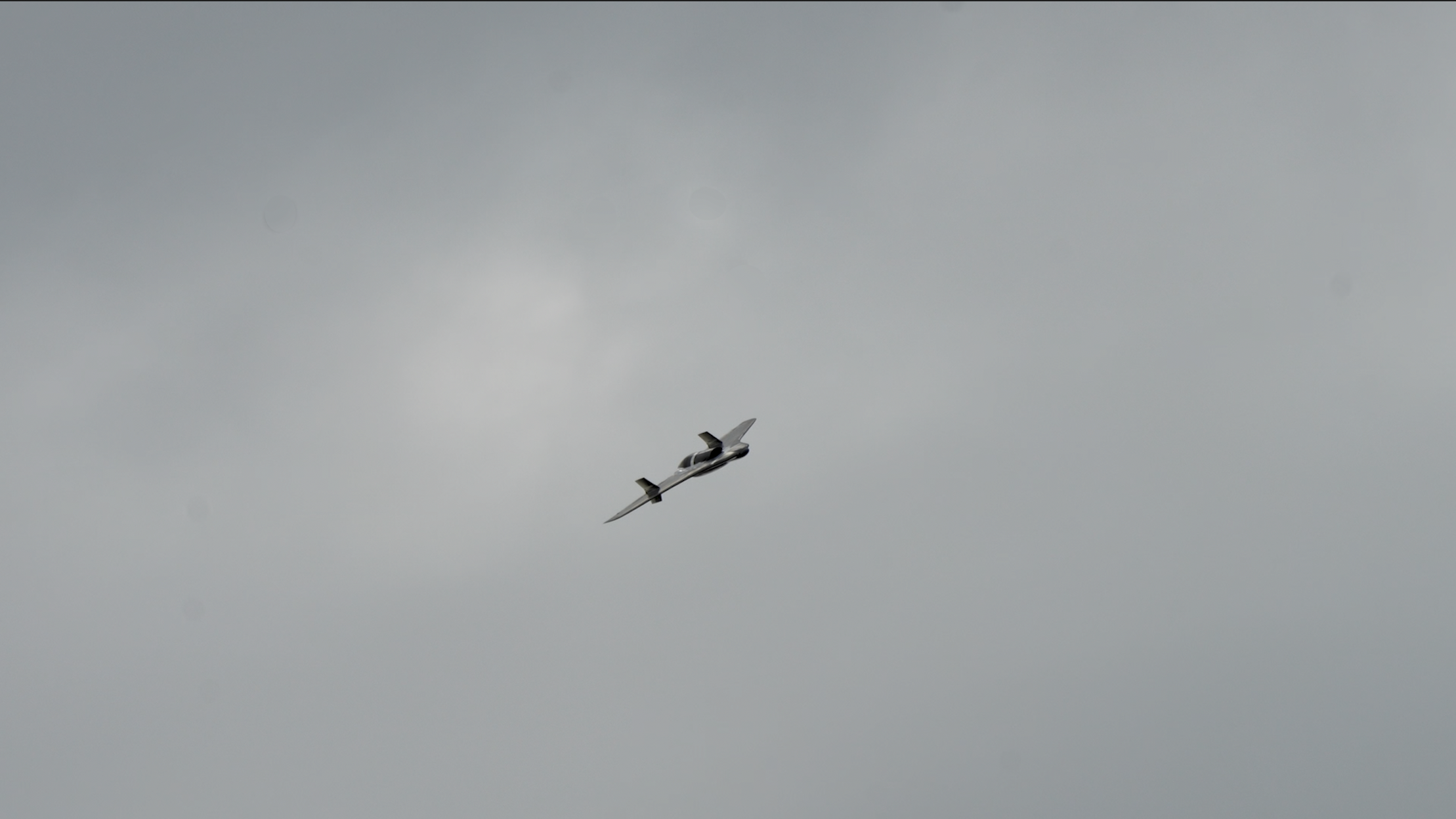
The Reaper RC jet in flight during Salvo's most recent round of testing.
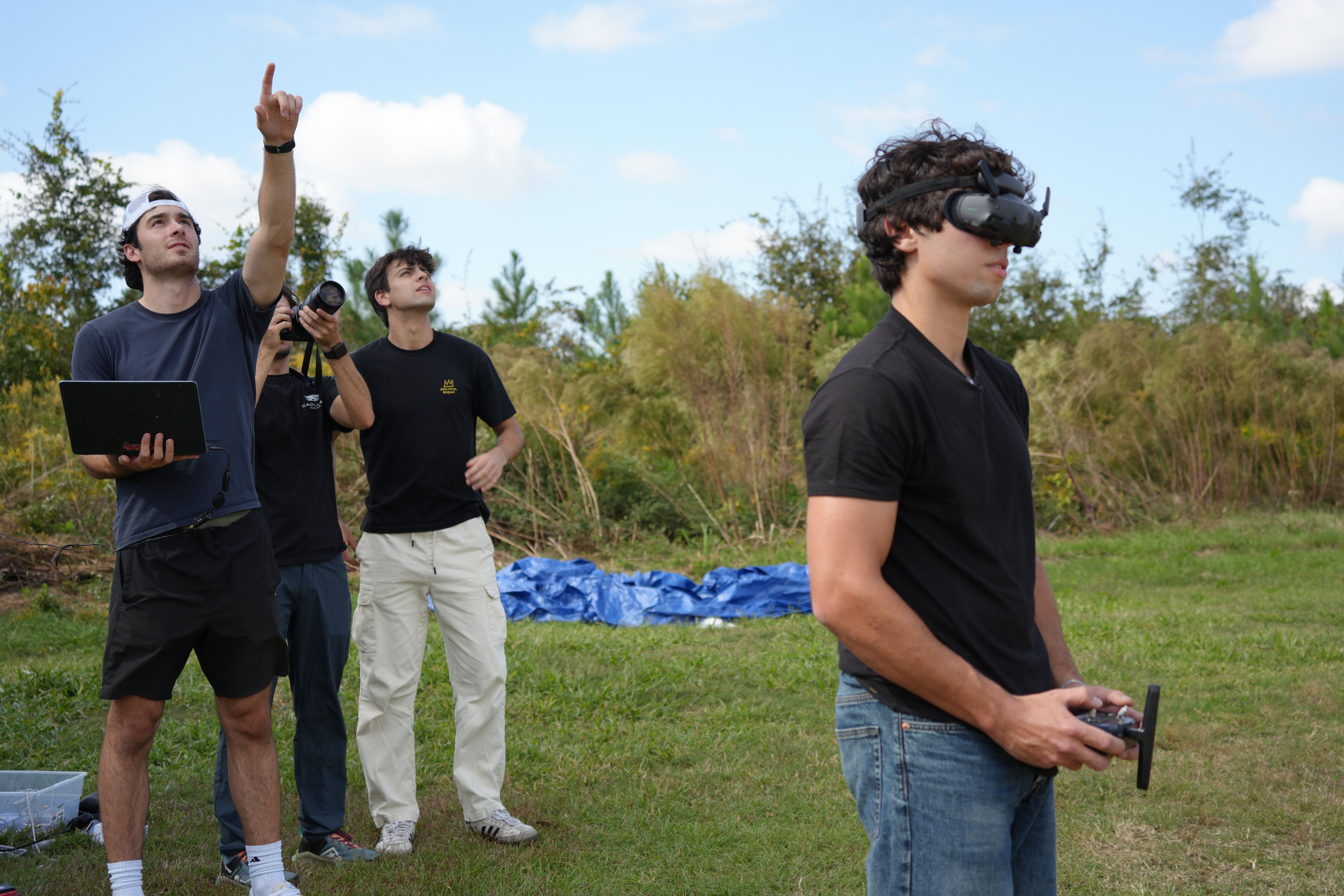
Tomas Salvo piloting the Reaper RC jet with his teammates looking on.