
Five Campus Buildings Earn TRUE Zero Waste Precertification
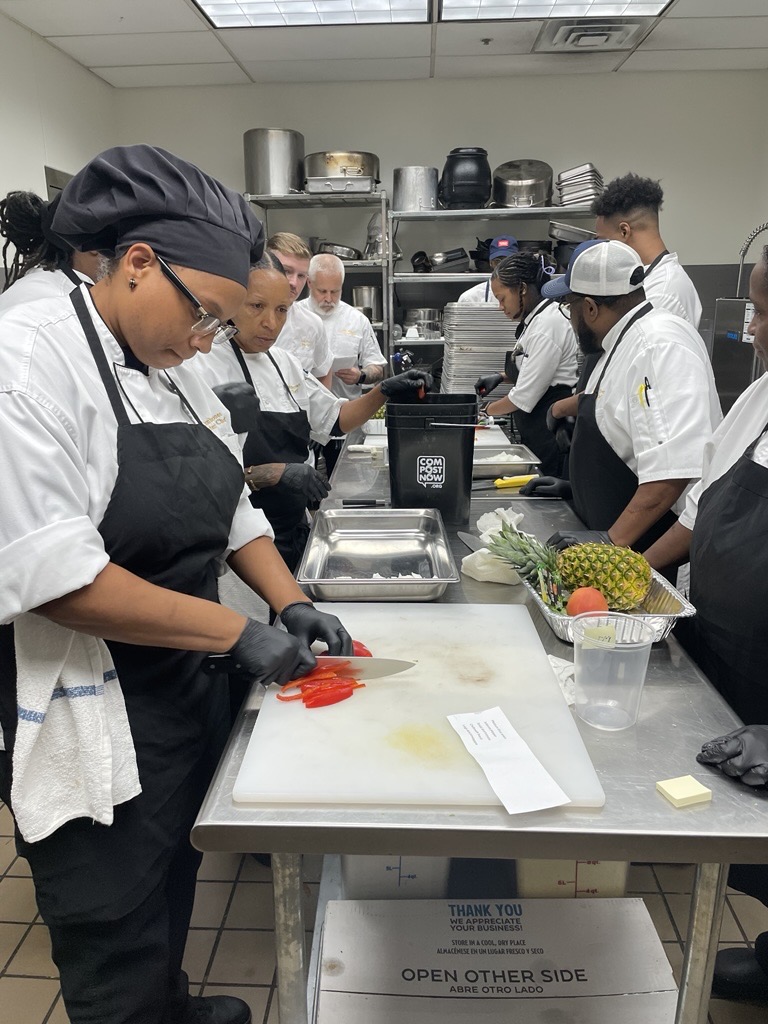
Chef training at Tech Dining incorporates zero-waste principles, including composting.
On average, Georgia Tech generates over 1,000 tons of landfill waste per month from classrooms and research labs, offices, dining halls, and event spaces. Reducing that waste takes daily attention to what we buy, how we use it, and what we throw away.
Across campus, teams are making waste reduction part of everyday operations through purchasing decisions, staff training, and regular reviews of waste practices. That work laid the foundation for five buildings to achieve TRUE Zero Waste Precertification: The Kendeda Building for Innovative Sustainable Design, the Parker H. Petit Biotechnology Building, the Daniel C. O’Keefe Building, West Village Dining Commons, and Exhibition Hall.
Administered by Green Business Certification Inc., TRUE Zero Waste provides a framework for reducing waste through purchasing, reuse, recycling, composting, and other operational practices. Precertification recognizes the foundational actions and policies needed to pursue full certification. Georgia Tech’s Institute zero waste goal, defined in the Climate Action Plan and the Sustainability Next plan — 90% waste diversion from landfill by 2050 — and the Georgia Tech Sustainable Procurement Guide satisfied two key requirements for TRUE.
The Office of Sustainability led the project’s data collection and analysis in partnership with Infrastructure and Operations, Campus Services, and teams within each building. Together, they evaluated waste operations, tracked materials entering and leaving facilities, and identified opportunities for improvement.
At The Kendeda Building, those efforts include choosing high-quality surplus furniture instead of purchasing new items. Building Manager Brooke Johnson estimates that this approach saved the building more than $20,000 while extending the useful life of existing furniture. Kendeda’s loading dock is also home to a campus recycling station for hard-to-recycle streams including glass, personal electronics, and polystyrene.
Within Campus Services, preparing West Village and Exhibition Hall for precertification involved operational changes, staff training, and ongoing attention to purchasing and waste handling. Tech Dining conducts weekly sustainability audits and reviews the findings during staff meetings or morning stand-ups. Those conversations allow teams to address issues as they arise and adjust practices based on what they are seeing in their facilities.
A March waste audit at West Village recorded an 87.5% diversion rate, providing a snapshot of progress and helping identify opportunities for improvement. Full TRUE certification requires an average diversion rate of at least 90% over 12 months, along with additional program criteria.
“Precertification gives us a chance to look closely at our systems, find what we still need to change, and put the right processes in place before we pursue full certification,” said Erin Getzelman, Campus Services’ director of Sustainability.
The work at West Village and Exhibition Hall will help guide waste reduction efforts across Tech Dining, including how teams size and service bins, track materials, and prepare staff to support these practices.
In the Parker H. Petit Biotechnology Building, staff, faculty, and trainees have organized an ongoing lab equipment and supply swap table and added compost service and recycling bins for polystyrene, plastic wrap, candy and snack wrappers, and writing utensils. The O’Keefe Building is home to Infrastructure and Operations teams that manage waste in renovation, construction, and daily operations across campus, and lead by example with updated recycling bins and by recycling maintenance equipment and supplies.
These five buildings offer opportunities to learn how waste reduction practices can work in facilities with different uses and operational needs. Lessons from each will help inform Georgia Tech’s broader efforts to reduce waste, conserve resources, and manage operating costs.
Interested in reducing your department’s waste? Explore the Georgia Tech Zero Waste Resource Hub, Zero Waste Events Guide, and Sustainable Procurement Guide.
Additional Media
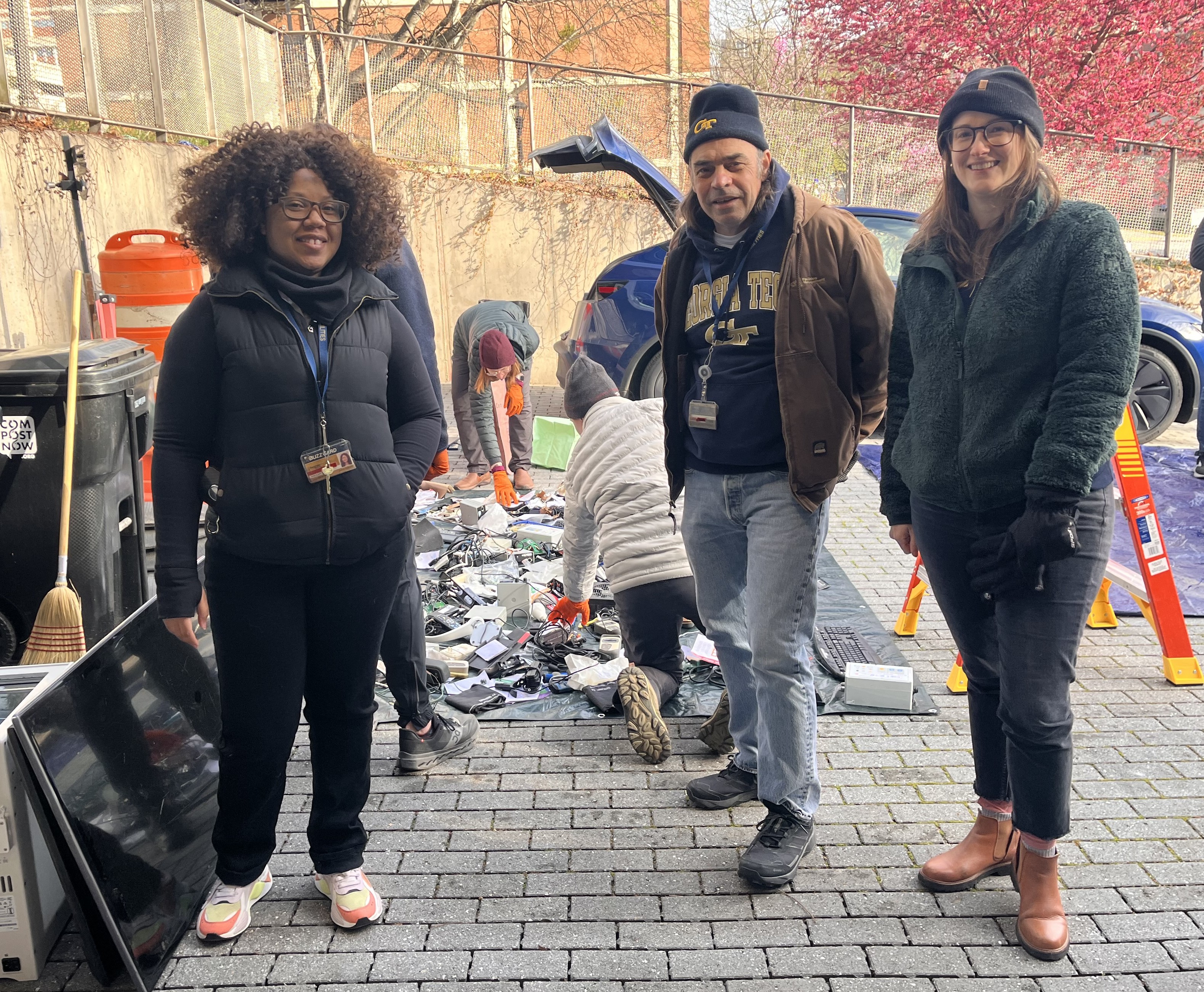
Office of Sustainability team members (left to right) Kamilah Roberts, Steve Place, and Drew Cutright at The Kendeda Building's waste audit in March 2026.