
Food for Fines Turns Parking Tickets Into Meals
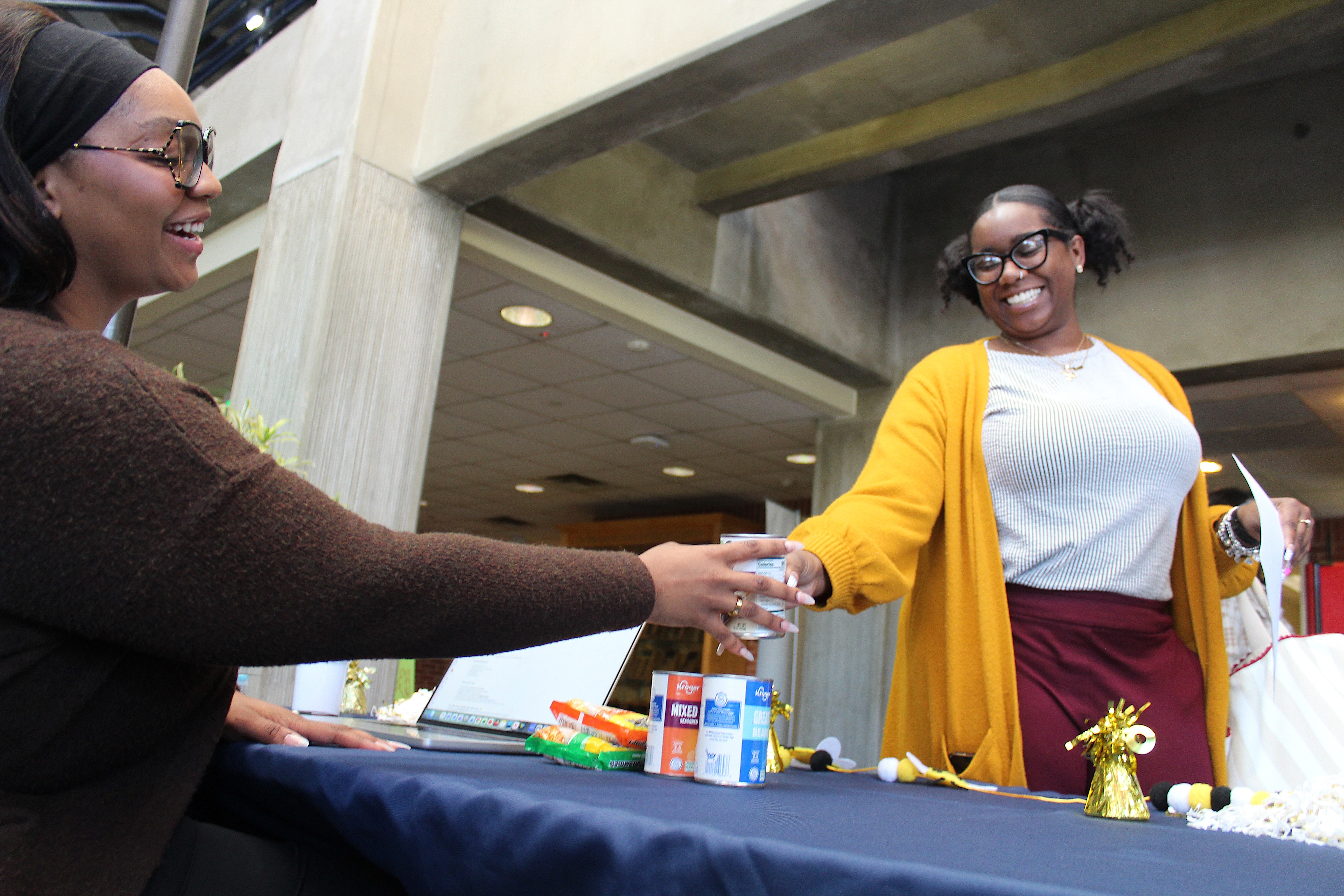
Cailley Young, a staff member in the Georgia Tech Center for Mental Health Care and Resources, participates in the Office of Civic Engagement’s Food for Fines event.
Paying a parking ticket is rarely a rewarding experience, but the Office of Civic Engagement’s (OCE) Food for Fines event let Georgia Tech students, faculty, and staff clear a traffic violation from their accounts by donating food to Klemis Kitchen, the Institute’s on-campus food bank.
In exchange for donating five, 10, or 20 nonperishable items, participants could receive up to a $50 credit toward an eligible traffic citation. The event was held in recognition of National Hunger and Homelessness Awareness Week, and donations will support those in need at Tech. As Thanksgiving and the holiday season near, the event’s organizers — OCE, Parking and Transportation, and Klemis Kitchen — say it’s an opportunity to show how a small act of philanthropy can go a long way.
“OCE is about recognizing that making a difference in our community starts with understanding the needs around us and finding meaningful ways to respond. Food for Fines is one example of how we bring that commitment to life at Georgia Tech by turning an everyday opportunity into an act of service,” said Jayde Nelson, Student Life program director. “This initiative is a reminder that service does not always require a large commitment; a small act can create a big impact. Sometimes, it starts with a simple act of giving that makes a meaningful difference in someone else's life.”
Hiba Abubaker, a third-year industrial engineering student, had put off paying a citation, and when she learned of the event, she jumped at the chance to clear her account and provide a source of comfort for anyone in the Tech community who needs it.
“It’s a great way to give back to the community and to clear my fine. People are trying to allocate resources as best they can, and make their holiday season special, and may not have the resources to feed themselves or their families. I think it’s important for those who have the means to help do something about it,” she said.
Operated by Students’ Temporary Assistance and Resources (STAR), Klemis Kitchen’s mission is to make sure students never have to skip a meal, while also reducing food waste on campus. In addition to its original location in the BioQuad, the organization operates three outposts — Clough Undergraduate Learning Commons, Grace House, and the Graduate Student Lounge — and partners with Tech Dining to offer a five-meal-swipe "Klemis Meal Plan" for students who are experiencing temporary food insecurity but do not need long-term access to Klemis Kitchen.
“Succeeding at Georgia Tech requires students to function at peak performance. Students experiencing food insecurity are at risk of not getting enough calories to function at peak performance, and they must spend part of their already diminished energy trying to find their next meal. Addressing food insecurity frees students to focus on their schoolwork, rather than spending time and energy navigating an entirely avoidable situation,” STAR Program Director Steve Fazenbaker said.
To learn more about Klemis Kitchen and to request access, visit their website.
Cailley Young donated and recruited several co-workers from the Center for Mental Health Care and Resources to join her. While she hopes to stay citation-free moving forward, she is happy to be part of a good cause.
“I don’t want to get another ticket, but if I do, this is a great way to pay it off,” she said.