
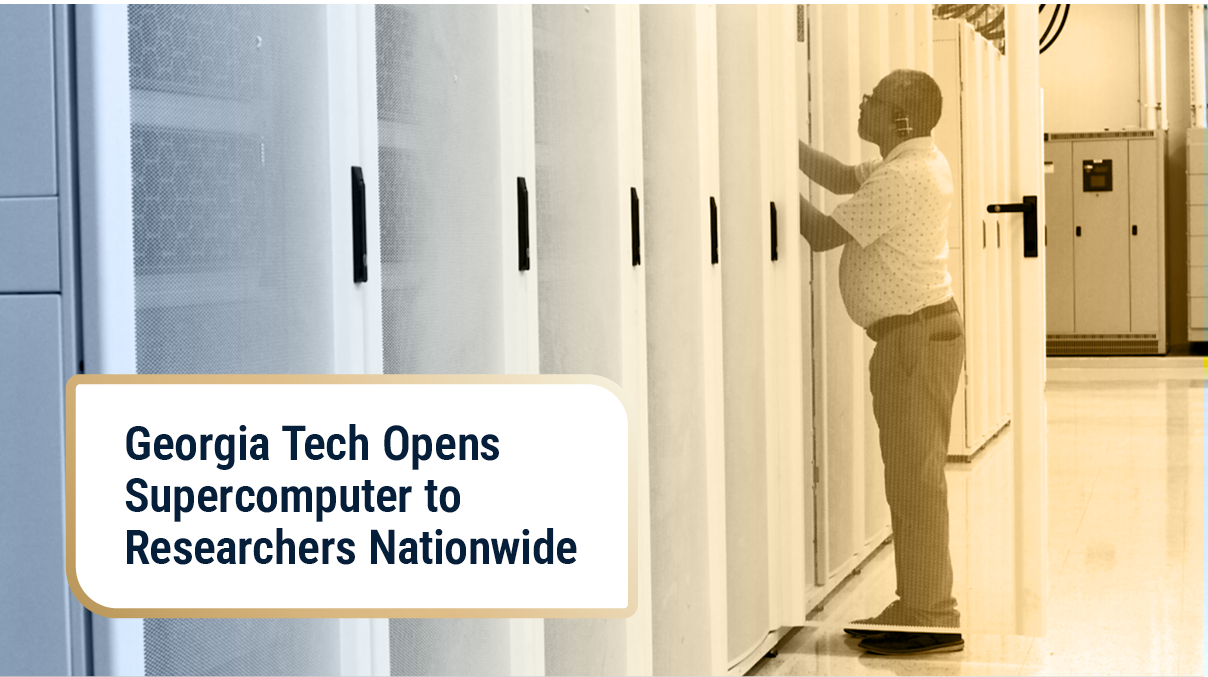
Built with support from the National Science Foundation, and in partnership with the University of Illinois, Nexus brings next-generation AI computing to researchers across the United States.
For media inquiries, contact:
Angela Barajas Prendiville
media@gatech.edu
ATLANTA — Oct. 12, 2026 — Georgia Tech is opening a new frontier in scientific computing with Nexus, a next-generation AI supercomputer that will serve as a resource for researchers across the United States. Nexus combines traditional high-performance computing with cloud-based services, allowing researchers to run complex projects that require enormous computing power over longer periods of time.
“Expanding the nation’s computing capacity for scientific discovery reflects Georgia Tech’s commitment to advancing research that drives progress and improves lives,” said Ángel Cabrera, president of Georgia Tech. “This new resource will help researchers across the country accelerate discovery and strengthen collaboration in fields where access to advanced computing can make a meaningful difference.”
Supported by a $20 million investment from the National Science Foundation (NSF) and developed in partnership with the University of Illinois Urbana-Champaign, Nexus integrates artificial intelligence with high-performance computing to enable researchers to address computationally intensive problems involving large-scale data analysis and sophisticated computational modeling.
Nexus will also contribute to the National Artificial Intelligence Research Resource, an NSF-led effort to expand access to advanced AI computing, data, and other research resources for scientists and engineers nationwide.
“Nexus is part of a broader effort at NSF to strengthen America’s research infrastructure and give researchers across the country access to the advanced computing capabilities they need to accelerate scientific discovery,” said Irina Dollinskaya, NSF Directorate Head for Computer and Information Science and Engineering. “By bringing together advanced computing capabilities and expertise from across the research community, Nexus will help broaden the range of scientific questions researchers can tackle and strengthen the nation’s capacity for AI-enabled discovery.”
As a national computer resource, at least 90% of Nexus’ computing capacity will be made available to the national science and engineering community through an open, peer-reviewed allocation process coordinated by the NSF-funded Advanced Cyberinfrastructure Coordination Ecosystem: Services & Support program. The system will give researchers across fields — from drug discovery and neuroscience to energy, aerospace, robotics, and advanced manufacturing — access to computing power needed to pursue questions once constrained by computational limits.
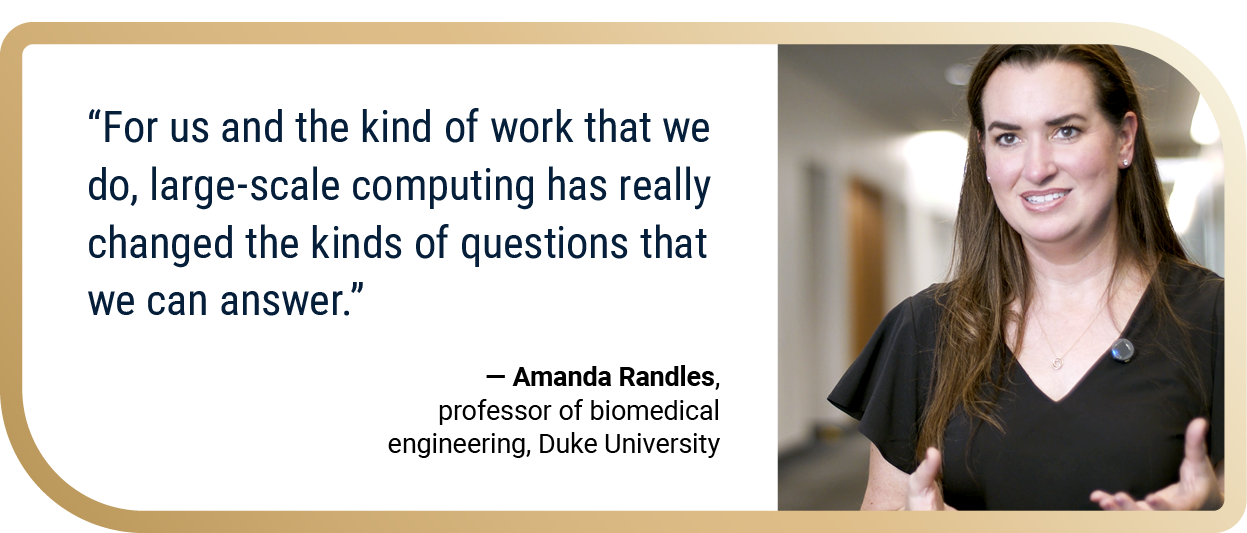
One example is the work of biomedical researcher Amanda Randles at Duke University. Her team uses its HARVEY software and large-scale computing systems such as Nexus to create highly detailed “digital twins” of the human circulatory system. These models simulate blood flow down to the level of individual cells, helping researchers explore ways to diagnose and monitor cardiovascular disease without invasive procedures. With Nexus, Randles’ team can run simulations over much longer time periods and investigate how changes in blood flow may relate to everyday activity and cardiovascular risk. The work illustrates how advanced computing can turn complex biological processes into models that may ultimately help physicians make more informed decisions about patient care.
“Solving the complex challenges of our modern world requires collaboration across disciplines and institutions,” said Charles Isbell, chancellor of the University of Illinois Urbana-Champaign and former dean of Georgia Tech’s College of Computing. “Georgia Tech and Illinois bring complementary expertise to Nexus, and we are excited to contribute to the National Center for Supercomputing Application’s decades of experience operating national-scale computing resources and supporting the researchers who use them. Together, we are building the partnerships and infrastructure that enable discovery and ultimately improve the lives of those we serve.”
Nexus is housed at Georgia Tech’s Coda data center in Atlanta, extending the Institute’s investment in advanced computing infrastructure and its role in the nation’s technology and research ecosystem.
Learn More About the Nexus Supercomputer >