School of Earth and Atmospheric Sciences researchers find dangerous sulfates are formed, and their particles get bigger, within the plumes of pollution belching from coal-fired power plants.
Rachel Moore spent nearly 50 days in one of the most remote places on Earth, collecting ice cores; the research has implications for climate change predictions and searching for signs of life on icy worlds.
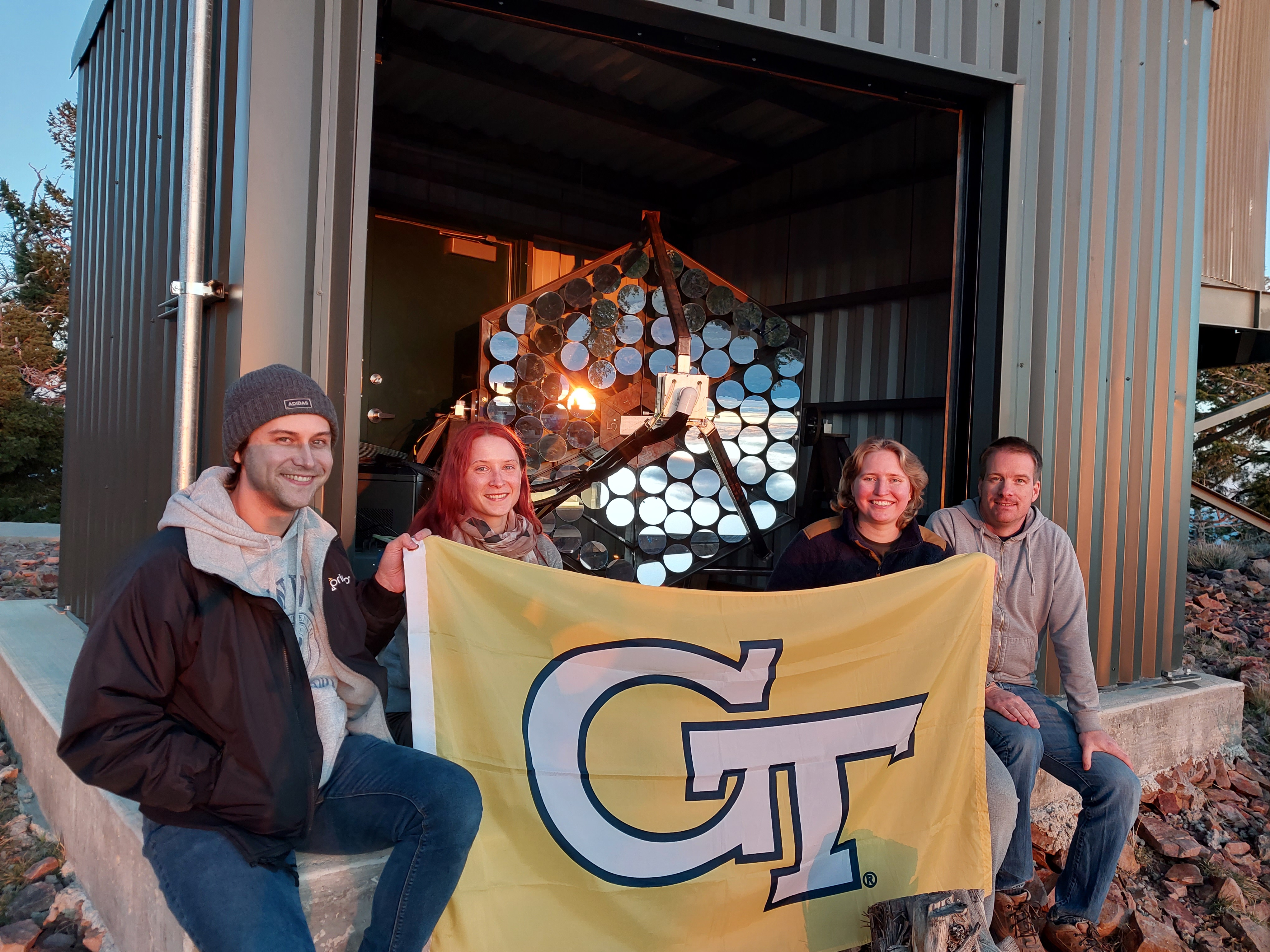
Physics Professor Nepomuk Otte and students have developed the Trinity Demonstrator to search for sources of high-energy neutrinos that contain clues to the early universe.
The research, which was published in Nature Astronomy last month, has the potential to impact our understanding of how water, a critical resource for life and sustained future human missions to the Moon, formed and continues to evolve.
University Archivist Alex McGee and Digital Accessioning Archivist Dillon Henry invite student organizations to learn how keeping records can be beneficial for years to come.
Physicists have developed a new model and clearer picture of molecular movements within active matter — bringing science a step closer to designing specific functions into new materials, and understanding emergent behaviors.
Cybersecurity master’s student Sneha Talwalkar and GTRI Principal Research Scientist Courtney Crooks are working to build the framework of an AI tool with the goal of providing support and protection to domestic abuse survivors.
Through a partnership among Enrollment Management, Institute Communications, Housing and Residence Life, and Athletics, the Georgia Institute of Technology launched the YouVisit Virtual Campus Tour on Aug. 14.