

Many Space Missions Are Searching for Life Beyond Earth – But Are We Prepared for the Fallout if They Succeed?
With more space missions launching each year, finding extraterrestrial life in a microbial form is becoming more plausible. What will the response be back here on Earth if – or when – scientists discover extraterrestrial microbes?

New Center Seeks to Unlock the Science of Turbulence for Energy, Flight, and Discovery
To advance understanding of turbulence, the National Science Foundation is establishing a new, $30 million Science and Technology Center (STC) at Michigan State University. Georgia Tech is among eight universities supporting the center.

Georgia Tech's Shield Research Environment Earns Top Rating in Federal Cybersecurity Assessment
A third-party assessment validated the Institute's ability to support Department of Defense-related projects and protect sensitive information.

New Model Teaches Workplace AI to Read More Like Humans
The new AI framework called SlideAgent helps large language models (LLMs) better understand complex visual documents used in the workplace like presentation slide decks, brochures, and reports.

Georgia Tech Strengthens Atlanta's Innovation Ecosystem Through Tech Square Tech Hop and Avant South
Tech Square Tech Hop and Avant South showcase Georgia Tech's leadership in strengthening Atlanta's growing innovation ecosystem.
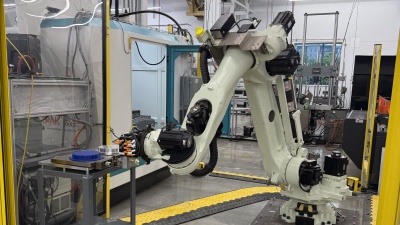
Georgia Tech to Lead National Cloud Laboratory for Advanced Manufacturing and Materials
The cloud lab will give researchers nationwide remote access to Georgia Tech’s Advanced Manufacturing Pilot Facility, pairing AI with autonomous experimentation to accelerate new materials discovery.

From Diagnosis to Wellness, AI's Healthcare Revolution
As artificial intelligence becomes more integrated into healthcare, researchers are exploring its potential to support clinical decision-making, improve mental health interventions, expand access to care, and accelerate medical innovation.
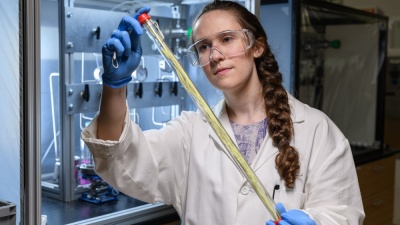
Georgia Tech Helps Advance Genesis Mission, a National Effort to Transform Scientific Discovery Through AI
Institute researchers will lead two projects and contribute to several others as part of the Department of Energy’s $5 billion initiative.

What Is Open‑Source AI? A Software Engineering Researcher Explains
The labels refer to whether all of the information about how an AI model works is publicly available and the model can be modified, or whether the model’s developer keeps its inner workings secret and the model itself private property.

AI Is Rewriting Cybersecurity's Rules
AI is giving cybercriminals new speed and scale, but researchers say the technology could also become one of cybersecurity’s strongest defenses.